
When to Follow Up With PlayBattleSquare Support
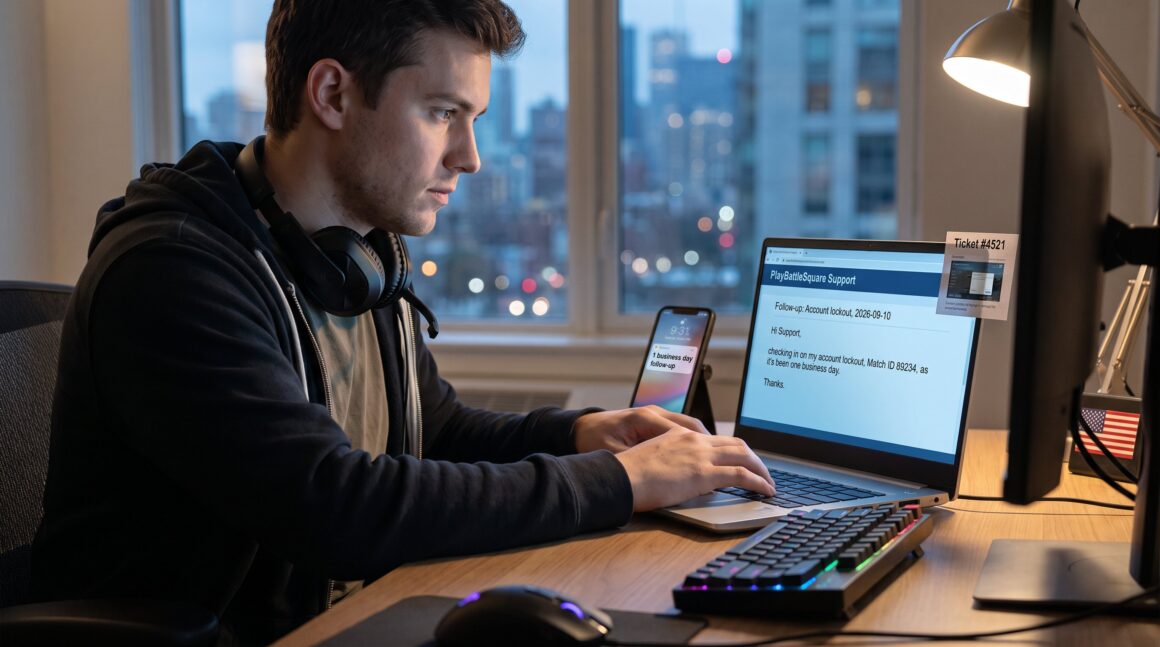
When to Follow Up With PlayBattleSquare Support matters the moment a match, purchase, or account issue blocks play. PlayBattleSquare promises a reply within one business day on its contact page, so gamers can expect a quick first touch. This guide explains realistic timing, clear triggers for follow-up, and a step‑by‑step template for messages that get results. It helps esports players, hobbyists, and community moderators get faster resolutions without repeating themselves or wasting time.
Key Takeaways
- PlayBattleSquare support aims to respond within one business day for most inquiries, setting a clear expectation for gamers.
- Follow up politely if no reply is received after one business day, or immediately for urgent game-impacting issues with full details provided.
- Use specific contact routes for billing or partnership queries to avoid delays and ensure faster handling.
- A concise follow-up message should include your name, contact info, original message date, issue summary, provided evidence, and a clear next-step request.
- Avoid sending multiple identical messages; instead, consolidate updates into a single clear follow-up to speed resolution.
- Escalate by mentioning time sensitivity and copying relevant specialized contacts if deadlines or promised timelines are missed.
What To Expect From PlayBattleSquare Support
Fact first: PlayBattleSquare replies by email or contact form and aims to respond within one business day for typical inquiries. That one-business-day promise sets an expectation gamers can plan around.
Response channels and real timelines: support uses email and the site contact form, and the UK page notes replies come “as soon as reasonably possible,” with times that vary by inquiry type and volume. In a different contact context, the terms page advises waiting 2–3 weeks for certain queries. That means some categories (billing, legal, or complex partnership requests) will take longer than simple account fixes.
What users should hear in a first reply: a confirmation of receipt, an estimated next step or timeline, and a request for any missing details. If a gamer reports a banned account or match loss, support typically acknowledges within a business day and then escalates if logs or developer input are needed.
Practical example: a player reports a lost tournament entry on Monday morning and gets an automated confirmation plus a human reply by Tuesday afternoon. If that reply requests a match ID and the player provides it the same day, an escalation to the events team often follows within 48–72 hours.
Where to find official guidance: players who want contact details or submission tips should consult the site’s central help page for forms and email instructions in context. For specific contact steps and recommended fields, the article on support and inquiries explains what information to include and how to structure a report.
Signs of a longer wait: billing disputes, business proposals, and cross-team investigations often hit the 2–3 week window. Use the official “contact about billing” route when money is involved to avoid routing delays: that channel is optimized for finance queries and reduces handoffs.
When To Follow Up With Support — Timing And Triggers
Direct answer up front: follow up if no reply arrives after one business day, if an urgent issue remains unresolved even though a first reply, or if the support team asked for more information and that information was already provided.
Concrete timing rules:
- No reply in one business day: send a polite follow-up. PlayBattleSquare lists one-business-day replies on its contact page, so this is the baseline expectation.
- Urgent matters: follow immediately if the problem affects ongoing play (tournament deadlines, live payouts, or account lockouts) and the original message included full details.
- After an initial reply: wait for the timeline provided. If support promised a 48‑hour internal check and nothing arrives by day three, follow up.
Trigger examples with exact moments:
- Lost tournament prize: no reply by next business day, follow up at 24 hours. If the event deadline is 12 hours away, follow immediately and mark the message URGENT.
- Account lockout preventing login: follow after one business day, but send a second message within hours if the account blocks an impending match.
- Billing charge error: use the billing contact route and follow after one business day: if billing acknowledged receipt and asked for a receipt screenshot, provide it and follow only after the promised timeline passes.
Practical follow-up cadence (recommended):
- First follow-up: 24 business hours after initial contact. Keep it short and include original message date and ticket details.
- Second follow-up: 3–5 business days after first contact if no new information was provided.
- Escalation follow-up: 7–10 business days, mention timelines and request an estimated completion date.
Related resources: players handling account or community disputes can reference the official page that shows how to reach PlayBattleSquare and what fields speed processing. For help finding the correct contact method, the guide on where to find the official contact page points users to the right forms and regional options.
When not to follow up: avoid sending multiple identical messages inside a few hours, duplicate reports add noise and slow response. Instead, consolidate new evidence into one concise update.
Additional anchors for context: If the issue relates to playing rules or match setup, referencing the platform’s playing guidance can clarify terms quickly: the site’s article on playing tips and leveling helps players cite precise event names and match IDs to support staff.
How To Write A Clear, Effective Follow-Up Message
Straight answer: a follow-up message should start with name, contact email, original message date, one-sentence issue summary, and one line listing any previously provided evidence.
Step-by-step template (use this exact order):
- Subject line: concise and specific, e.g., “Follow-up: Account lockout, message 2026-09-10.” Short subject lines cut through inbox clutter.
- Opening line: identify who, when, and how, “They wrote on 10 Sep 2026 via contact form: email is [email protected].” This gives support immediate context.
- One-sentence summary: “Account locked after a tournament: cannot withdraw prize.” Keep it to one or two sentences.
- What was already sent: list attachments or evidence, “Attached: screenshot of error, match ID 89234, payment receipt.” Help staff avoid asking for basics again.
- Ask the precise next step: “Please advise whether the account can be unlocked within 24 hours so the player can join rounds.” A direct request prompts an actionable reply.
- Polite close and signature: include display name and account handle.
Concrete example message:
Subject: Follow-up: Tournament payout failed, 2026-09-10
They wrote: [email protected], original message 2026-09-10.
Issue: Tournament payout not processed: transaction failed after match.
Evidence: Attached screenshot of error message and payment ID 5543.
Request: Please confirm whether a manual payout is possible before 2026-09-12.
Thanks,
Alex “BladeRunner” Chen, PlayBattleSquare ID 1122
Why this works: it avoids repetition, gives support everything needed to act, and sets a short, reasonable deadline. That clarity reduces back-and-forth and typically shortens resolution time.
Warnings and lessons learned: players who send emotional, long messages often see slower responses. One signed player reported saving three days of back-and-forth after switching to this concise format. Another common mistake is omitting account handles, without them, support must ask follow-up questions that add 48–72 hours.
When to escalate: if a crucial timeline passes (tournament start or payout window), include the phrase “time-sensitive” and copy the dedicated billing or events address when relevant. For business or partnership requests, follow the partnership guidance in the site’s business inquiry article so the message lands with the right team: see the page about business inquiries for formatting tips.
Conclusion
Key insight: PlayBattleSquare sets a one-business-day expectation for replies. If no reply arrives after that window, a concise follow-up that includes original dates, evidence, and the requested next step is appropriate.
Final practical note: use the site’s specialized contact routes for billing or partnerships to shorten handoffs, and avoid duplicate messages that slow processing. Players who follow these steps reduce average resolution time and preserve stress-free play.


