
What Are RSPS and How Do RuneScape Private Servers Work?
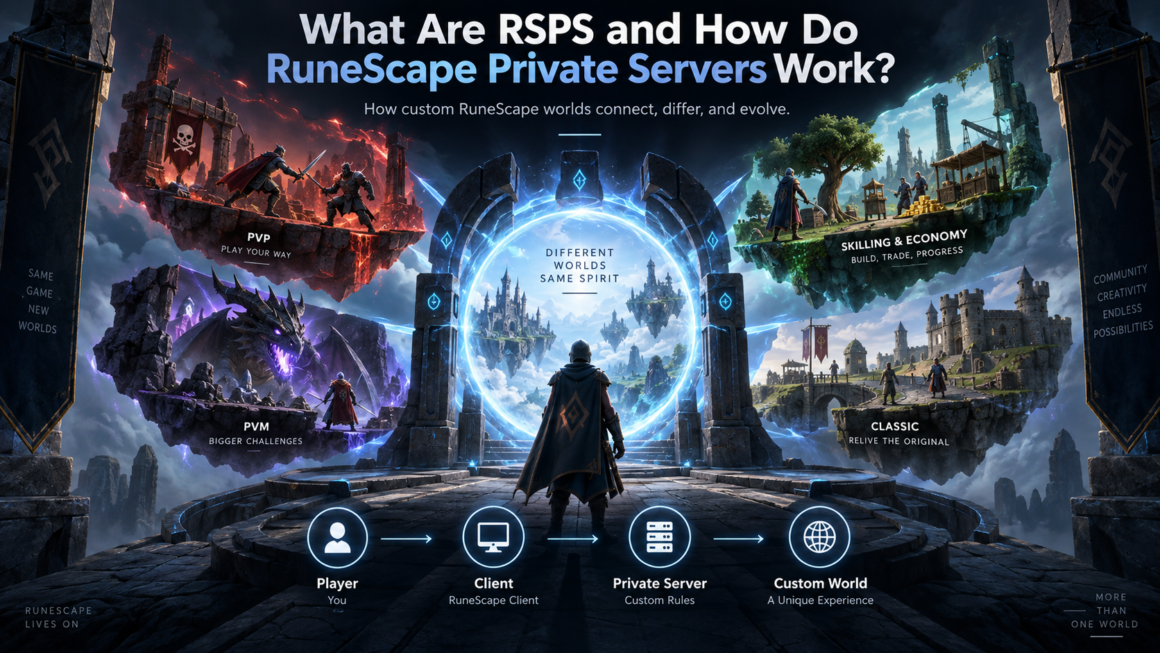
RuneScape has been around long enough for players to remember very different versions of the game. Some miss older combat systems, others want faster progression, and some simply want content that does not exist in the official game. RuneScape private servers grew around those different preferences and now range from close recreations of older eras to heavily customized worlds with their own bosses, equipment, and progression systems.
If you are curious about what is currently available, browsing RSPS can give you a quick look at different server types before you decide whether any of them match the way you like to play. Understanding what private servers actually are first makes those listings much easier to read.
What Are RuneScape Private Servers?
RSPS stands for RuneScape Private Server.
In simple terms, an RSPS is an unofficial game server inspired by RuneScape. It is operated independently rather than by Jagex, the company behind the official RuneScape games.
That does not mean every private server is trying to create the same experience.
Some projects aim to reproduce a specific RuneScape era. Others use familiar mechanics as a starting point and then change progression, combat, items, bosses, areas, or even the overall structure of the game.
This is why two servers on the same RSPS list can look similar at first and feel completely different once you start playing.
Why Do RuneScape Private Servers Exist?
Players come to private servers for different reasons.
One of the biggest is nostalgia. RuneScape has changed significantly over the years, and some players prefer the combat, graphics, interfaces, or progression of a specific period.
Others want to reach familiar content faster.
Official RuneScape can require a significant time investment before certain bosses, skills, or equipment become available. A private server may use higher XP rates, easier access to items, or shorter progression paths.
There is also room for experimentation.
Private-server developers can add content that does not exist in the official game, including:
- Custom bosses. Servers may design their own encounters, mechanics, rewards, or raid-style activities
- Original equipment. Weapons and armor can have custom stats, effects, or upgrade paths
- New currencies. Additional currencies may be used for events, boss rewards, shops, or progression
- Different game modes. Servers can create custom versions of Ironman, seasonal play, PvP modes, prestige systems, or challenge accounts
- Modified progression. XP rates, drop rates, unlock requirements, and gear tiers can be adjusted
- New areas. Some projects introduce custom cities, dungeons, hubs, or boss zones
These changes give private servers much more freedom to target a specific type of player.
A fast PvP server, for example, may remove most of the skilling grind. An economy server may do the opposite and make progression intentionally slower so that resources and trading remain important.
How Are RSPS Different From Official RuneScape?
The biggest difference is control.
Official RuneScape is developed, maintained, and updated by Jagex. A private server is managed by an independent development team or community.
That affects almost every part of the experience.
|
Area |
Official RuneScape |
Typical RSPS |
|
Operator |
Jagex |
Independent developers |
|
Updates |
Official development roadmap |
Server-specific updates |
|
XP Rates |
Set by the official game |
Often adjustable or increased |
|
Items |
Official equipment and rewards |
May include custom items |
|
Bosses |
Official PvM content |
Official-style and custom bosses |
|
Economy |
Large established economy |
Depends on server size and design |
|
Game Modes |
Official modes |
Often expanded or modified |
|
Community Size |
Very large |
Varies widely |
|
Progression |
Standard game progression |
Can be much faster or redesigned |
The smaller scale of private servers can also make individual communities feel different.
On one server, most players may spend their time around PvP. Another may revolve around raids, Ironman progression, or trading. A third may be designed mainly for players who want an old-school experience.
That is one reason an RSPS server list is useful. The name “RuneScape private server” describes a broad category rather than one standard type of game.
How Do RuneScape Private Servers Work?
From a player’s point of view, an RSPS can feel similar to logging into a regular online RPG.
You launch a client, connect to a server, create or access an account, and enter a game world.
Behind that simple process are several separate systems working together.
The Client, Server, and Player Data
A private server usually has a client that handles what the player sees and interacts with.
The client displays things such as:
- Character models
- Maps and environments
- Inventory
- Interfaces
- Combat animations
- Shops
- Chat
- Equipment
- Menus
The server handles the game logic behind those actions.
For example, when you attack a monster, the server determines what happens rather than relying only on what is shown on your screen.
It may process:
- Damage calculations
- Monster behavior
- Item drops
- XP gains
- Player movement
- Trading
- PvP interactions
- Quest progress
- Boss mechanics
- Account restrictions
Player information also needs to be stored somewhere.
That can include your skills, bank, inventory, equipment, achievements, completed tasks, account settings, and other progress.
This client-server structure lets players return later and continue with the same account instead of starting over every time they launch the game.
It also gives developers room to change game rules without rebuilding everything a player sees. For example, a developer can adjust an item’s drop rate by changing how the server handles that reward.
How Servers Change Progression
Progression is one of the biggest differences between private servers.
An RSPS server list may contain servers with extremely fast XP rates alongside projects where leveling takes much longer.
The right approach depends on what the server is designed to offer.
These servers speed up leveling so players can access later content quickly.
They often appeal to players interested in:
- PvP
- Bossing
- Testing different builds
- End-game gear
- Shorter gaming sessions
- Faster account development
A player may reach high combat levels relatively quickly instead of spending a large part of the experience training basic skills.
Low-Rate or Economy Servers
These projects place more emphasis on long-term account progression.
Skills, money, and equipment usually require more time, which can make smaller upgrades feel more important.
They may attract players interested in:
- Trading
- Skilling
- Long-term progression
- Rare drops
- Building wealth
- Developing one account over time
Spawn Servers
Spawn servers can reduce preparation even further.
Players may be able to obtain certain equipment or supplies quickly, making combat the main focus instead of gathering resources.
This is particularly common in PvP-focused environments where the main attraction is fighting other players rather than building an account from the beginning.
How Custom Content Works
Not every private server wants to recreate RuneScape exactly.
Custom servers may use familiar RuneScape systems while creating their own progression around them.
For example, a server could add several new equipment tiers. Players might defeat one group of bosses to collect materials, upgrade a weapon, and then use that weapon to enter the next level of content.
Another server might focus on custom raids.
Others may introduce:
- Prestige systems
- Seasonal events
- Battle-pass-style progression
- Custom pets
- Achievement stores
- Item upgrading
- Boss tokens
- Daily challenges
- Collection logs
- New skill rewards
The important point is that “custom” can mean many different things.
A few modified items technically count as custom content, but so does a server where most of the end game has been redesigned.
When reading an RSPS list, look at what the server actually describes rather than relying only on the word custom.
How Economies Develop on Private Servers
An RSPS economy works through the same basic idea as many online games: players obtain resources and items, then use, sell, trade, or upgrade them.
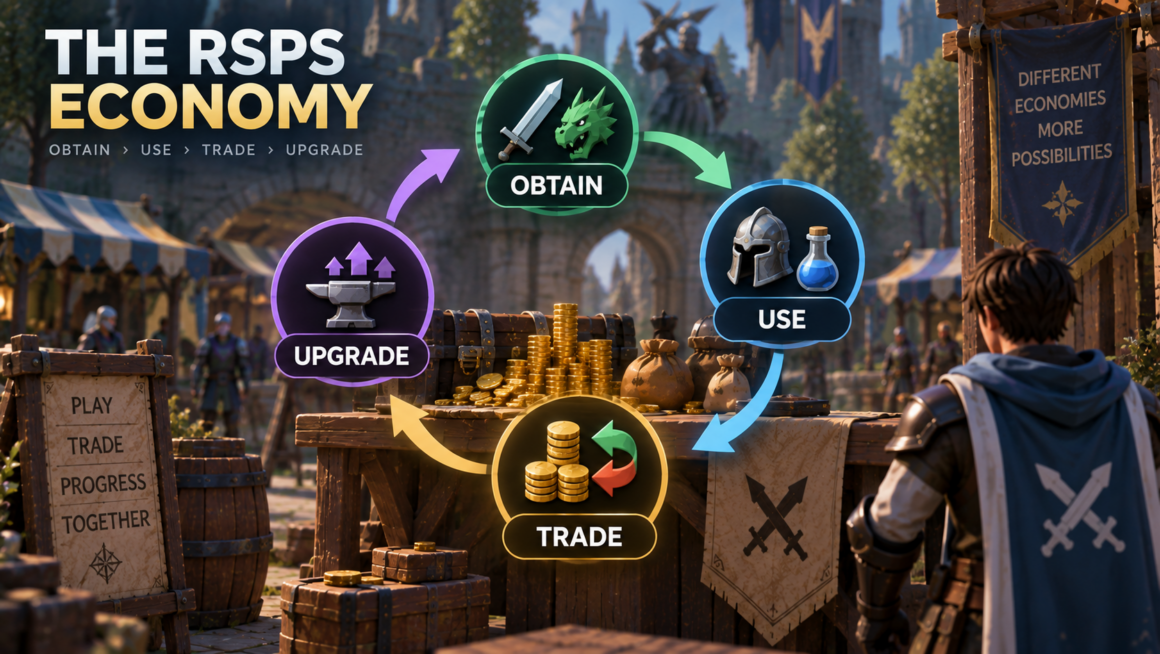
The details depend heavily on server design.
Several systems can affect the economy:
- Drop rates. Easier drops increase the number of items entering the game
- Player population. More active players usually mean more trading
- Shops. NPC shops may control access to basic items or supplies
- Item sinks. Upgrade systems or other mechanics can remove items from circulation
- Money sinks. Fees, shops, or services can remove currency from the economy
- Skilling demand. Useful resources give gathering and production skills a stronger role
- Trading systems. Player-to-player trading or marketplace systems affect how easily items move
A server with very high drop rates may have a completely different economy from one where rare items take much longer to obtain.
This is why terms such as economy, high-rate, and spawn are useful when comparing projects on an RSPS server list.
They give you an early clue about how much time the server expects players to spend building their accounts.
How Players Find and Compare RSPS
The number of private servers makes it difficult to find the right one through random searches alone.
That is where directories come in. An RSPS list organizes different servers in one place so players can compare projects without already knowing their names.
What an RSPS List Can Show
The exact information varies between directories, but listings commonly help players compare several basic details.
These may include:
- Server name and description. A short overview of what the project focuses on
- Gameplay type. PvP, PvM, economy, custom, old-school, or another category
- Features. Information about bosses, modes, clients, or progression
- Rankings or ratings. Signals that can help with discovery
- Player activity. Some listings may provide information related to population or activity
- Access options. Mobile or desktop support may be mentioned
- Server website. Players can continue to the project’s own site for more information
A directory is most useful as a filter. Instead of choosing the first project you see, you can compare several listings and remove options that clearly do not match what you want.
For example, a player looking for long-term economy progression can skip servers centered entirely on instant PvP. Someone looking for mobile access can focus only on projects that support their device.
How to Read Server Descriptions
Private-server descriptions often contain a lot of familiar gaming terms. Understanding them makes an RSPS server list much easier to use. Here are some of the most common:
- PvP. Player-versus-player combat is a major part of the server
- PvM. Bossing and combat against monsters receive more attention
- Economy. Trading, money-making, drops, and long-term progression matter
- Spawn. Players may gain quick access to equipment or supplies
- Custom. The server includes content not found in standard RuneScape
- Ironman. Solo progression modes may be available
- Old-school. The project is designed around an older RuneScape feel
- High-rate. XP or progression is faster than normal
- RuneLite. The server may support a RuneLite-style client experience
- Mobile. Players may be able to access the server from supported phones or tablets
No single term tells you everything about a server. A project might describe itself as an economy server but still have high XP rates. A custom server can include traditional old-school systems alongside completely new bosses.
Read several details together before deciding what the label means in that specific project.
What Should You Check Before Joining?
Once an RSPS list helps you narrow the options, check the remaining projects in more detail.
A short checklist is usually enough:
- Identify the main gameplay focus. Decide whether the server actually centers on content you enjoy.
- Check progression speed. Fast and slow servers create very different experiences.
- Look at recent activity. Updates, announcements, and community discussions can show whether the project is actively maintained.
- Review device support. Confirm desktop or mobile compatibility before investing time.
- Check monetization. Understand what paid features provide and how they affect progression.
- Look at community size. Population matters more for PvP, trading, and group content than it does for solo play.
- Check onboarding. Tutorials, wikis, and progression information can make complex servers much easier to learn.
A highly ranked server can still be the wrong choice if its main gameplay does not match what you enjoy.
Key Findings
RSPS are unofficial RuneScape-inspired servers that give independent developers much more control over progression, combat, content, economies, and game modes.
Some recreate a familiar RuneScape era. Others speed up leveling, center the game around PvP, or build entirely new progression systems around custom bosses and equipment.
Behind the scenes, the basic idea is straightforward: a game client lets the player interact with the world, while the server processes game rules, account data, combat, drops, progression, and other systems.
The real variety comes from the decisions each server makes on top of that structure.
That is also why an RSPS server list can be useful. It gives players a way to compare different approaches before investing time in one project.
Instead of asking which private server is universally best, start with a simpler question: what type of RuneScape experience do you actually want?
Once you know that, the differences between PvP, PvM, economy, old-school, high-rate, and custom servers become much easier to understand.
FAQ About RuneScape Private Servers
What Does RSPS Stand For?
RSPS stands for RuneScape Private Server. It describes an unofficial server inspired by RuneScape and operated independently from the official game.
Are All RSPS the Same?
No. Private servers can differ in XP rates, combat, bosses, items, economies, clients, game modes, and progression. Some closely follow older RuneScape versions, while others add large amounts of custom content.
What Is an RSPS List?
An RSPS list is a directory that organizes multiple RuneScape private servers in one place. Players can use it to compare server descriptions, gameplay types, features, rankings, and other available information.
What Is the Difference Between an RSPS List and an RSPS Server List?
The terms usually refer to the same general type of directory. Both help players discover and compare RuneScape private servers.
How Does an RSPS Work?
Players connect through a game client, while the server processes gameplay systems such as movement, combat, XP, drops, inventories, trading, and account progression. Player data is stored so progress can continue across sessions.
Why Do Some RSPS Have Faster XP Rates?
Higher XP rates allow players to reach later content more quickly. This is common on servers focused on PvP, bossing, or shorter progression cycles.
What Is a Custom RSPS?
A custom RSPS adds content or systems beyond standard RuneScape gameplay. This may include new bosses, weapons, armor, currencies, zones, upgrade systems, or progression paths.
Do RSPS Servers Have Their Own Economies?
Many do. Item availability, drop rates, player trading, shops, money sinks, and the size of the player base can all affect how an individual server economy develops.
Does Player Count Matter When Choosing an RSPS?
It depends on what you want to do. A larger population can be important for PvP, trading, clans, and group content. Solo PvM or Ironman players may be comfortable on smaller servers.
What Should I Check Before Joining a RuneScape Private Server?
Check the server’s gameplay focus, progression speed, client support, recent updates, community activity, monetization, and available documentation. A short comparison between several options is usually more useful than choosing based only on ranking.


