
MM2 Trading Guide: How to Know If a Trade Is Worth It
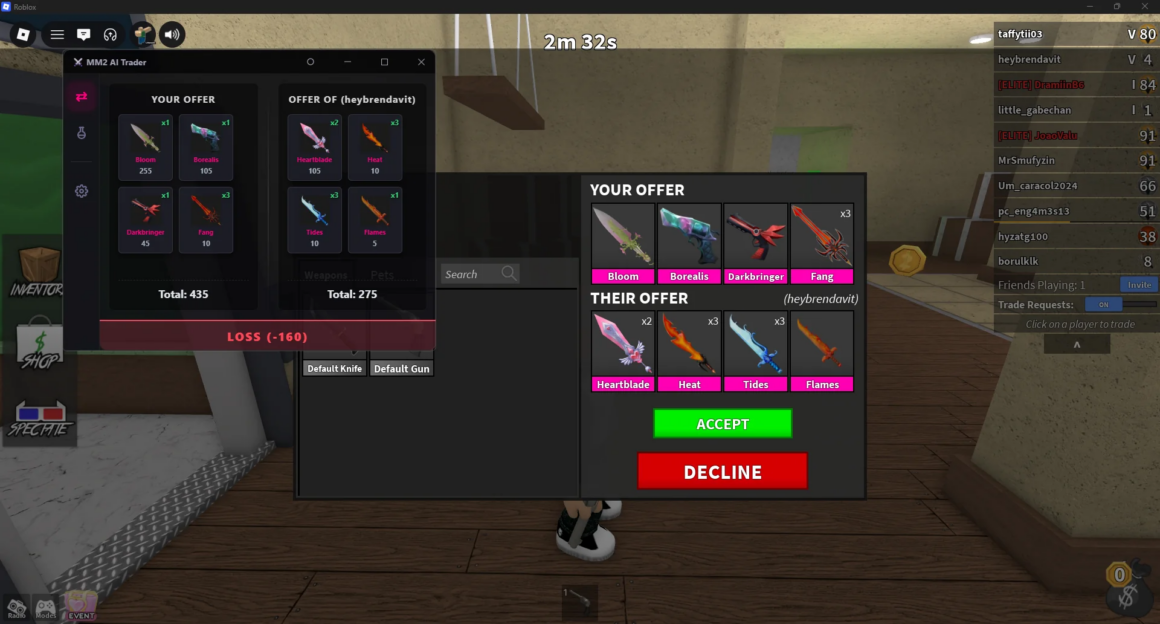
Murder Mystery 2 has one of the most active trading communities in Roblox, and learning how it works can make a big difference when building your inventory. Knives, guns, Godlys, Ancients, Chromas, and collectibles move between players constantly, but knowing when to accept an offer and when to walk away is what matters most.
Whether you’re building your first Godly collection or trying to trade up into more valuable items, understanding how MM2 values and demand work is the best place to start. Players looking for specific weapons outside normal trading can also browse an MM2 Shop to compare available items, but knowing how the trading market values those items is still important before making any deal.
How Does Trading Work in MM2?
Trading in Murder Mystery 2 becomes available once you reach the required level. From there, you can send another player a trade request, add items to the trade window, review both sides of the offer, and accept when you are satisfied with the deal.
The basic process is simple. The difficult part is deciding whether what you are receiving is actually worth what you are giving away.
MM2 does not have an official fixed price list for traded items. The values you see on community value lists are estimates based on how items are currently trading, so they can change as demand, supply, and market sentiment shift.
That is why checking a single number is rarely enough to judge a trade properly.
What Makes an MM2 Item Valuable?
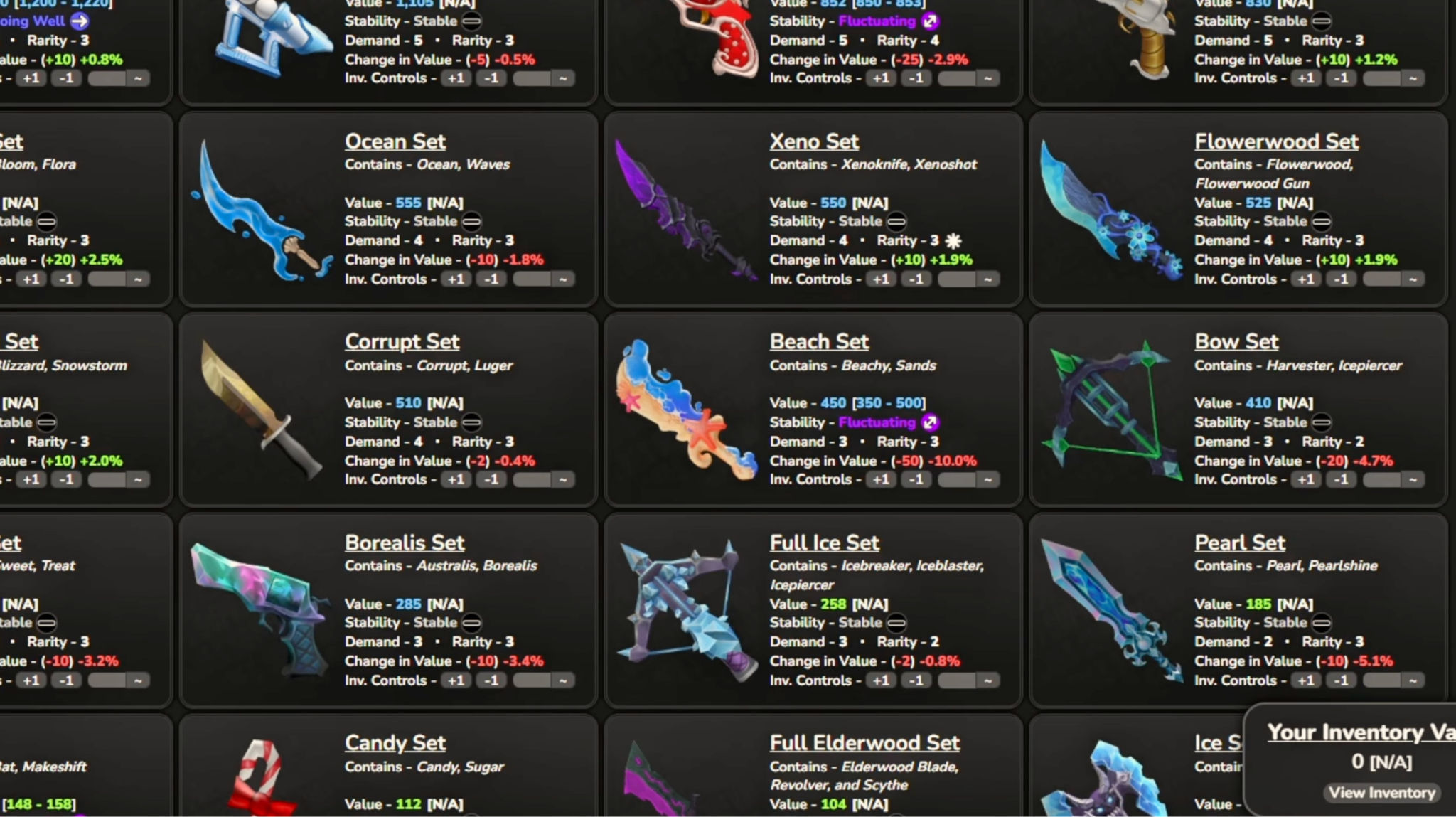
A fair MM2 trade usually depends on several factors working together: value, demand, rarity, and current trend. Treating any one of them as the whole picture can lead to poor trades.
|
Factor |
What It Tells You |
|
Value |
The community’s rough estimate of an item’s current trading value |
|
Demand |
How actively other traders want the item |
|
Rarity |
How difficult the item is to find or obtain |
|
Trend |
Whether its value and demand are rising, stable, or falling |
Rarity and Availability
Rarity describes how difficult an item is to obtain and how widely it appears in player inventories.
Items from old events, limited crates, or seasonal content can carry additional appeal because they may no longer be obtainable through their original method. Once an event ends, new copies may stop entering the game through that method unless the item returns.
That can increase scarcity, but scarcity alone does not guarantee strong trading value.
Some older items receive relatively little attention even though they are difficult to obtain. Rarity creates potential, but demand determines how much other traders are actually willing to offer.
Demand and Popularity
Demand describes how actively players are looking for a specific item.
A high-demand Godly may attract offers more frequently and can be easier to trade again later. This matters when you are trying to grow your inventory through multiple trades rather than simply collecting items you personally like.
One thing that often catches newer traders out is that two items can have similar listed values while performing very differently in actual trades.
The higher-demand item may attract more offers and give you more options later. A low-demand item can still have a strong listed value, but finding someone willing to offer that amount may take longer.
Collectibility and Limited Items
Collectibles can operate differently from commonly traded Godlys and other weapons.
Players completing themed sets or searching for specific event pieces may be willing to offer above the commonly listed value for an item they particularly want. Personal collection goals can therefore affect what an individual trader considers a fair offer.
That makes collectibles both an opportunity and a risk. A collector may value your item more highly than the average trader, but finding that person can take time.
Do not automatically accept a large bundle of lower-demand items simply because their combined listed value appears higher. Consider how easy those items will be to trade again.
How to Compare MM2 Items Before a Trade

Before accepting an important trade, compare both sides using more than one factor.
Check Current MM2 Values
Start by checking current MM2 value lists to establish a rough baseline for the items involved.
Using more than one current source can give you a broader picture than relying on a single number, especially when an item has recently moved in value or demand. Different community lists may update at different times or evaluate demand differently.
Large disagreements between sources are usually a reason to slow down and investigate rather than immediately accept the trade.
|
What to Check |
Why It Matters |
|
Value from current lists |
Gives you a baseline for comparing both sides |
|
Recent trend |
Shows whether an item is rising, stable, or falling |
|
Demand |
Helps estimate how easy the item may be to trade again |
|
Last update |
Helps you spot potentially outdated values |
Compare Demand, Not Just Value
After checking the listed values, ask another important question:
Will other players actually want this item from me later?
This matters especially when you are trading up.
A numerically equal trade can still be unattractive if you give away one desirable, high-demand Godly and receive several lower-demand items that are difficult to move. Your total listed value may look similar, but your inventory can become harder to trade.
High-demand items generally give you more flexibility. Low-demand items are not automatically bad, but you should understand the extra difficulty of finding the right buyer before accepting them.
Which MM2 Items Are Most Valuable?
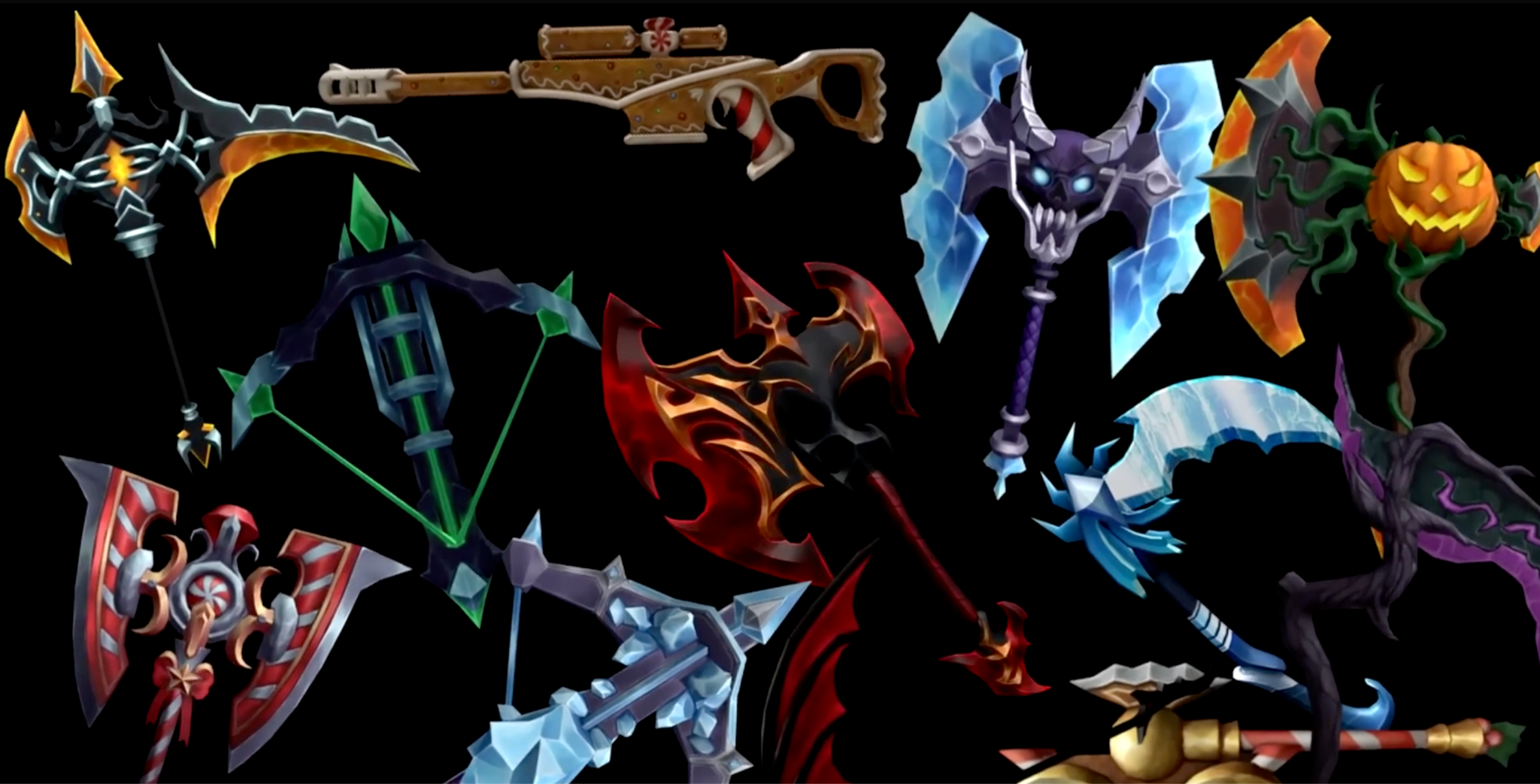
There is no single item category that is automatically more valuable than every other category. The specific weapon, its availability, demand, and current market position matter more than its rarity label alone.
Godlys and Ancients
Godlys are a major part of MM2 trading because they are widely recognized and frequently appear in player offers.
Ancients can be worth more than many Godlys, but that is not always the case. Specific Ancient items may attract strong offers because of their rarity, appearance, or event history, while others may have weaker demand.
Never assume that an Ancient is automatically more valuable simply because of its rarity category. Check the specific item before comparing offers.
Chromas and Collectibles
Chromas add distinctive color-shifting effects to existing weapon designs, but the Chroma label alone does not determine how valuable an item is.
Chroma values can move differently from their standard Godly counterparts because demand depends on rarity, appearance, supply, and current collector interest. Some Chromas are highly desirable, while others can be surprisingly difficult to trade.
Event collectibles can also attract more attention when related seasonal content returns, but demand is not guaranteed to rise on a predictable schedule.
Treat seasonality as one signal rather than assuming an older Halloween, Christmas, or other event item will automatically become more valuable when that season comes around again.
How to Tell If an MM2 Trade Is a Win, Fair or Loss
The MM2 trading community commonly uses WFL — Win, Fair, or Loss — as a quick way to describe which side of a trade received the better deal.
You can run through a simple five-step check before accepting an offer.
Step 1: Compare current values. Look up the items involved and establish a rough value range for both sides of the trade.
Step 2: Compare demand. If the listed values are similar but you are receiving the more desirable and easier-to-trade item, the offer may be more attractive.
Step 3: Check the trend. Look at whether either item is rising, stable, or falling. Trend direction can affect how other traders view an item, but it should be considered alongside current value and demand rather than used on its own.
Step 4: Consider what you can do with the item next. An item that fits your collection or can easily be used in another trade may have more practical value to you than an awkward group of low-demand items.
Step 5: Watch for pressure. Pressure to accept quickly is a reason to slow down and double-check the offer. If someone repeatedly tries to stop you from checking values or reviewing the trade, treat that as a warning sign.
A trade does not need to be perfectly equal on a value list to be good for both players. Personal preference, demand, and collectibility can all justify small differences when both sides understand what they are exchanging.
Common MM2 Trading Mistakes to Avoid
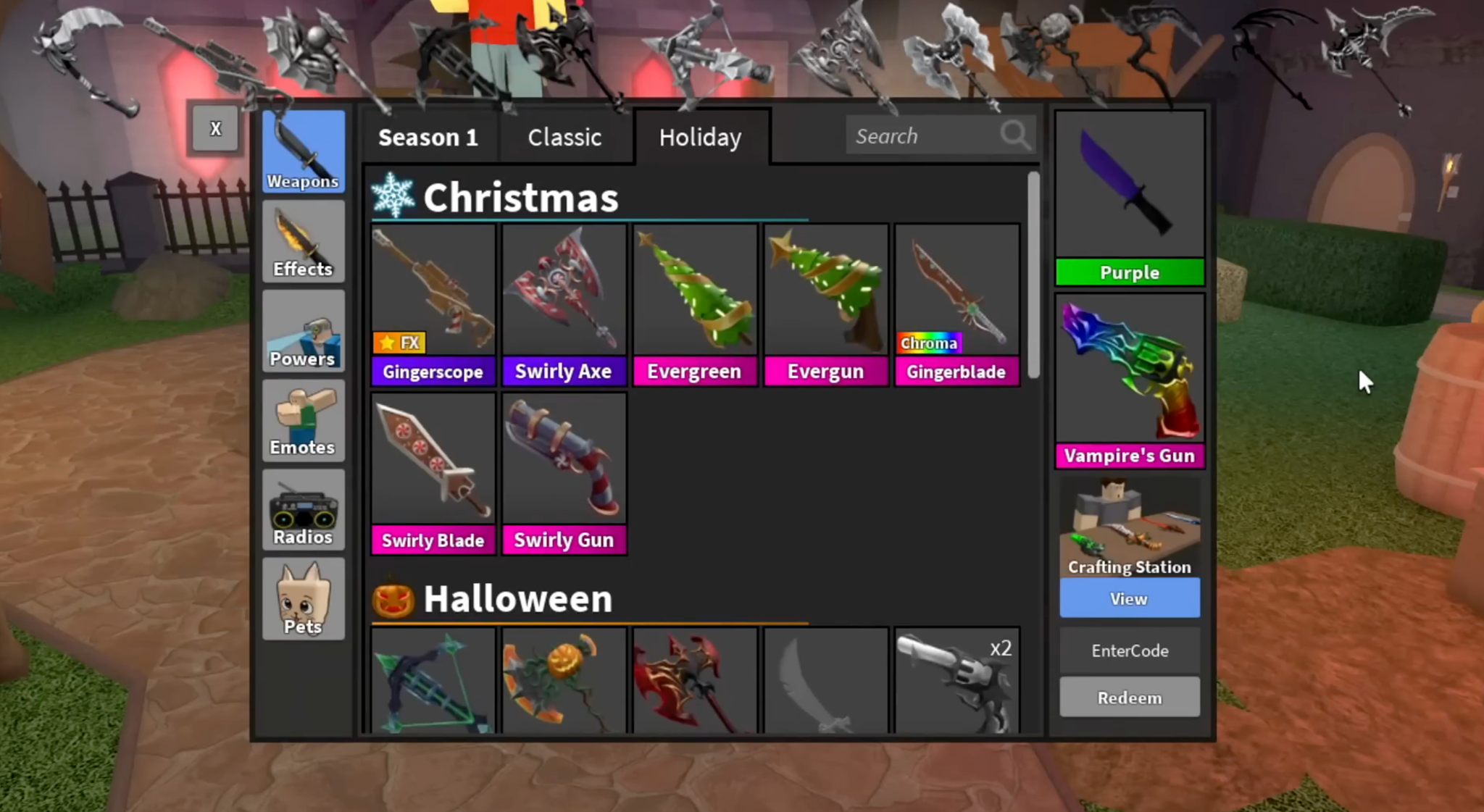
Overpaying for High-Demand Items
New event items and trending Godlys can attract large overpays while hype is high.
That does not mean those premiums will last. As more copies enter circulation or player interest changes, an item that initially attracted very strong offers can become much easier to obtain.
Avoid assuming an early trading premium will hold simply because an item is new or currently popular. If you are considering a large overpay, check recent value and demand changes first.
Falling for Trading Scams
Avoid trust trades that require you to hand over an item before receiving anything in return. Keep the complete exchange inside the normal trade window whenever possible so you can review exactly what you are receiving before accepting.
Other warning signs include:
- Pressure to accept before you have checked the values
- An unknown or unverified middleman
- Offers that suddenly change after you have already agreed to terms
- Promises of future payment for items you give away now
- Cross-trades involving Robux, gift cards, real money, or items from other games
If an offer depends on something happening after you have already handed over your item, the safest option is usually to walk away.
Final Tips for Getting Better MM2 Trades
Consistency matters more than chasing one huge win. Building a stronger inventory usually comes from making sensible trades repeatedly and avoiding unnecessary losses.
- Look for more trading opportunities. Different servers contain different players, inventories, and collecting goals. Meeting more traders gives you more chances to find someone who actually wants what you have.
- Use trading communities carefully. Trading communities can expose you to more offers and help you see how other players currently value specific items. Use established communities where possible, and be cautious with unsolicited DMs, unknown links, or unverified middlemen.
- Track trends over time. Value, demand, and stability can change quickly. Watching an item across multiple updates gives you more context than reacting to a single rise or drop.
- Be cautious with low-demand pets. Some pets can be harder to move than popular weapons, so check the specific item’s demand before accepting it as a large part of a trade.
- Build toward a “clean” inventory. In trading terms, that means favoring desirable, easy-to-move items instead of spreading your value across too many low-demand pieces.
Most importantly, do not judge an MM2 trade by one number alone. Value gives you a starting point, but demand, rarity, trend, and how easy an item will be to trade again are what turn that number into a useful decision.
