Kid Playing Video Games: The Complete 2026 Parent’s Guide to Benefits, Risks, and Healthy Gaming Habits
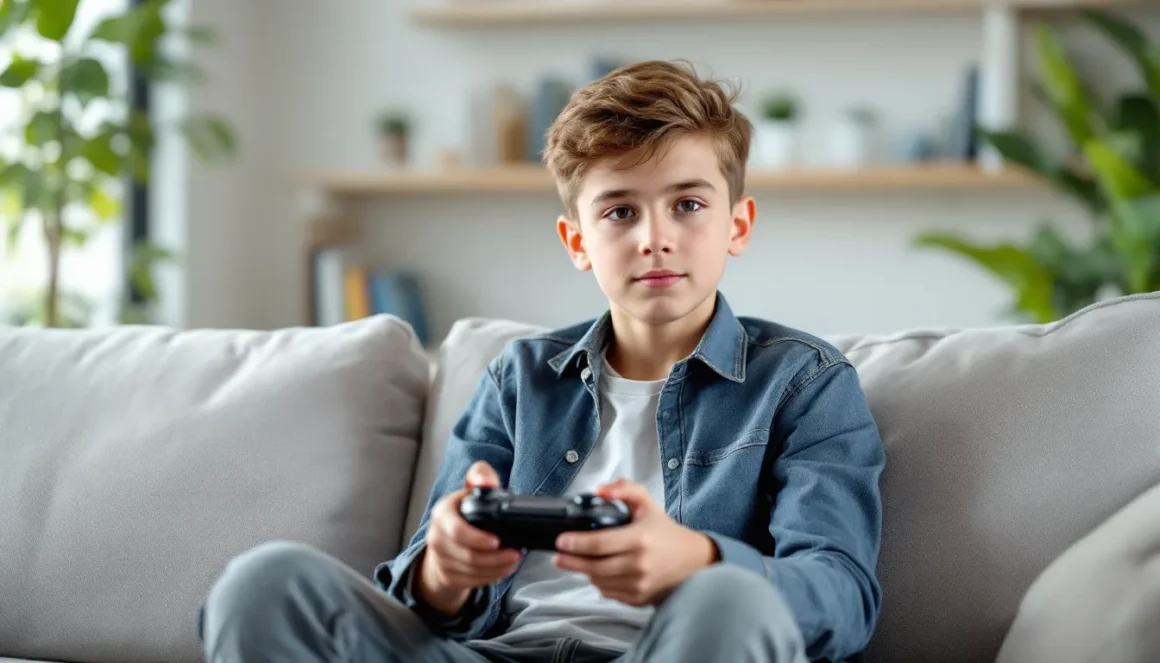
Watching a boy playing video games on the couch isn’t just about entertainment anymore, it’s become a defining part of modern childhood. In 2026, over 72% of children under 15 game regularly across consoles, PC, and mobile devices, making gaming as common as watching TV was for previous generations. But for parents, that controller-wielding kid raises important questions: Is this good for their development? How much is too much? What games are actually worth their time?
This isn’t about demonizing screen time or pretending every gaming session turns your child into a prodigy. It’s about understanding the real benefits, recognizing genuine risks, and building a framework that lets kids enjoy gaming without letting it dominate their lives. Whether your child’s grinding in Fortnite, building in Minecraft, or exploring indie titles, this guide covers what you actually need to know, no fluff, no panic, just practical insight for navigating gaming in 2026.
Key Takeaways
- Over 72% of children under 15 now play video games regularly, making gaming as common as TV for previous generations and a normal part of modern childhood development.
- Video games build genuine cognitive skills including reaction time, spatial reasoning, problem-solving, and social coordination, with action games showing 15-20% faster reaction times compared to non-gamers.
- Set age-appropriate gaming boundaries (30-60 minutes for ages 3-5, up to 3-4 hours on weekends for ages 11-14) that balance gaming time with sleep, physical activity, and family connections rather than relying on arbitrary restrictions.
- Watch for signs of genuine gaming disorder (impaired control, prioritization over responsibilities, escalation) which affects only 2-3% of gamers, rather than assuming all heavy gaming is problematic or addictive.
- Protect kids from online risks including cyberbullying, predatory behavior, and inappropriate content by using platform safety features, maintaining open communication, and positioning yourself as an ally rather than an adversary monitoring their gaming.
- Gaming can lead to legitimate career opportunities in esports, game development, and coding—kids who create games through Roblox Studio, Unity, or modding communities build portfolio-worthy skills beyond entertainment.
Understanding Video Gaming in Childhood Development
Gaming isn’t a monolithic activity, a six-year-old exploring Animal Crossing has completely different needs and experiences than a 14-year-old competing in ranked Valorant matches. Understanding why kids gravitate toward games and what’s developmentally appropriate helps parents make informed decisions rather than reactive ones.
Why Kids Are Drawn to Video Games
Kids don’t just play games because they’re colorful or loud. Games tap into fundamental psychological needs that resonate especially strongly during childhood. Autonomy is a big one, in games, kids make meaningful choices and see immediate consequences. That sense of control is powerful when much of their real-world life involves following adult instructions.
Mastery and progression drive engagement too. Whether it’s leveling up a character, unlocking new abilities, or simply getting better at aiming, games provide clear feedback loops that reward improvement. The dopamine hit from completing a difficult boss fight or winning a close match is real, and it’s the same neurological reward system that makes learning instruments or sports satisfying.
Social connection matters more than parents often realize. For many kids, gaming is where friendships happen, coordinating strategies in squad-based shooters, trading items, or just hanging out in virtual spaces. It’s the modern equivalent of playing street hockey or meeting at the arcade, especially post-pandemic when physical meetups became less routine.
Age-Appropriate Gaming: What’s Suitable for Your Child
The ESRB rating system exists for a reason, but it’s not the complete picture. A game rated E for Everyone might still be frustratingly difficult for a five-year-old, while a T-rated game might be perfectly fine for a mature 11-year-old with proper context.
Ages 3-6: Focus on games with simple mechanics, bright visuals, and no time pressure. Think Kirby and the Forgotten Land, Sackboy: A Big Adventure, or educational titles like ABCmouse Games. Touchscreen games on tablets work well for developing fine motor skills, but limit sessions to 20-30 minutes.
Ages 7-10: Kids this age can handle more complex gameplay systems and light competition. Mario Kart 8 Deluxe, Pokémon Scarlet/Violet, and Minecraft remain gold standards. They’re building reading skills, so text-heavy RPGs like Pokémon actually support literacy. Avoid voice chat in online games, typed messages with filters are safer.
Ages 11-14: This is when kids often want to play what their friends play, which means Fortnite, Roblox, Minecraft multiplayer, and increasingly competitive titles. Games rated T for Teen (violence, mild language) become appropriate for many families. The key shift here is toward games with meta-strategies and social dynamics, they’re not just playing, they’re learning social hierarchies and teamwork.
Ages 15+: Most mainstream games become accessible, including M-rated titles depending on family values. At this age, conversations about content matter more than outright bans. If your teen wants to play Call of Duty or Elden Ring, discuss why those ratings exist and set expectations around behavior and balance.
The Proven Benefits of Kids Playing Video Games
The research on gaming’s cognitive benefits has matured significantly. We’re past the “do games rot your brain?” question and into much more nuanced territory about which benefits are real, which are overhyped, and under what conditions they actually occur.
Cognitive and Problem-Solving Skills Enhancement
Action games, particularly those requiring fast decision-making under pressure, demonstrably improve visual attention and spatial reasoning. A 2024 meta-analysis published in Psychological Bulletin found that kids who regularly played action titles showed 15-20% faster reaction times in attention-switching tasks compared to non-gamers, an effect that persisted even when controlling for prior cognitive ability.
Puzzle games and strategy titles build executive function skills: planning, working memory, and cognitive flexibility. Games like Portal 2, The Witness, or even Candy Crush variants require holding multiple pieces of information in mind while testing hypotheses. That’s the same cognitive machinery kids use for math word problems and reading comprehension.
One underrated benefit: failure tolerance. Games teach kids that failure is iterative, not final. You die to a boss 20 times, learn the pattern, adapt, and eventually succeed. That growth mindset transfers surprisingly well to academic challenges when properly reinforced.
Social Development Through Multiplayer Gaming
The stereotype of the isolated gamer is outdated. According to industry coverage from gaming outlets, over 65% of kids play multiplayer games specifically to socialize, not just for gameplay. Voice chat in Minecraft servers, Discord communities around specific games, and cooperative raids in Destiny 2 all require communication, negotiation, and teamwork.
Kids learn to coordinate with teammates who might have different skill levels, resolve conflicts (who gets the legendary drop?), and navigate social hierarchies. These are real social skills, just in a digital context. For shy or neurodiverse kids, gaming can be a lower-pressure environment to practice social interaction.
That said, online social environments aren’t automatically positive. Toxic behavior exists, which is why moderated servers and games with robust reporting systems (Roblox has improved significantly on this front in 2025-2026) matter.
Hand-Eye Coordination and Motor Skills Improvement
This benefit is most pronounced in younger children still developing fine motor control. Platformers like Super Mario Odyssey or rhythm games like Beat Saber (VR) require precise timing and spatial awareness. Studies show that laparoscopic surgeons who game perform procedures 27% faster with fewer errors, the same visual-motor integration applies to kids learning to write, catch a ball, or play instruments.
Fighting games and precision shooters develop micro-movements and muscle memory. The thousands of tiny corrections a kid makes tracking a target in Apex Legends or executing a combo in Super Smash Bros. Ultimate build neural pathways for fine motor control.
Creativity and Strategic Thinking Benefits
Sandbox games like Minecraft, Roblox Studio, and Dreams turn kids into creators. Building complex redstone contraptions in Minecraft teaches logic gates and sequencing, actual computer science concepts disguised as play. When discussing video game skills and cognitive development, researchers consistently point to open-ended games as cognitive development tools.
Strategy games, Civilization VI, Age of Empires IV, or even mobile titles like Clash of Clans, require resource management, long-term planning, and risk assessment. A 12-year-old managing their economy in Civ VI is practicing opportunity cost and strategic forecasting, even if they don’t realize it.
Potential Risks and Concerns Every Parent Should Know
The benefits are real, but so are the risks. The key is distinguishing between evidence-based concerns and moral panic. Let’s focus on what actually matters.
Screen Time and Physical Health Considerations
Eye strain is a legitimate issue. The 20-20-20 rule (every 20 minutes, look at something 20 feet away for 20 seconds) helps but kids rarely self-regulate this. Blue light filters and proper lighting reduce strain, though the evidence that blue light causes lasting damage is weaker than commonly claimed.
Sedentary behavior is the bigger concern. Kids who game 3+ hours daily without compensating physical activity show higher rates of childhood obesity and associated health issues. The problem isn’t gaming per se, it’s displacement of movement. A kid who games two hours but also plays soccer and bikes to school is in better shape than one who watches TV for six hours.
Posture and repetitive strain emerge quickly with poor ergonomics. Slouching over a laptop or craning toward a TV causes neck and back issues. Controllers can cause thumb strain (“gamer’s thumb” or de Quervain’s tenosynovitis) with extreme use.
Gaming Addiction Warning Signs
The WHO recognized “gaming disorder” in ICD-11, but the diagnostic criteria are strict, not every kid who plays a lot is addicted. According to gaming research outlets, genuine addiction involves:
- Impaired control: Unable to reduce play even though negative consequences
- Prioritization: Gaming takes precedence over other life activities and interests
- Escalation: Increasing amounts of time needed to feel satisfied
- Negative consequences: Continued gaming even though problems in school, health, or relationships
True gaming disorder affects 2-3% of gamers. More common is “problematic gaming”, not clinical addiction, but enough interference to cause family conflict. Warning signs include declining grades, withdrawal from friends who don’t game, and intense irritability when unable to play.
A boy playing video games for four hours on Saturday isn’t addicted. A kid who skips school, lies about gaming time, and has angry outbursts when the console is taken away might need professional assessment.
Online Safety and Cyberbullying Risks
Multiplayer gaming exposes kids to strangers, and not all strangers have good intentions. Predatory behavior exists, adults posing as kids, grooming through in-game chat, or requesting personal information. Games with open communication (VRChat, Roblox) carry higher risk than those with limited interaction (Fall Guys, Mario Kart online).
Cyberbullying in gaming takes specific forms: griefing (repeatedly killing someone to ruin their experience), doxing (revealing personal information), and harassment through voice chat. Competitive games with ranked modes (League of Legends, Overwatch 2) tend to have more toxic communities, especially at lower skill levels.
Kids also face scams: fake item trades, phishing links disguised as “free V-Bucks” or Robux generators, and account theft. Teaching skepticism about too-good-to-be-true offers matters as much as technical parental controls.
Exposure to Inappropriate Content
Ratings help, but they’re not foolproof. User-generated content in Roblox or Fortnite Creative can bypass official ratings, a kid playing an E-rated game might still encounter player-created levels with inappropriate themes. YouTube gaming content is another vector: your child might play age-appropriate games but watch YouTubers who swear constantly or discuss adult topics.
Violence in games is the perennial concern. The research consensus as of 2026: violent games increase short-term aggressive thoughts and feelings, but there’s no clear evidence they cause long-term violent behavior in children without other risk factors. Context matters, cartoon violence in Fortnite affects kids differently than realistic gore in survival horror titles.
Setting Healthy Gaming Boundaries and Screen Time Limits
Rules without reasoning breed resentment. The goal is boundaries that kids understand and can eventually internalize, not arbitrary limits that spark constant negotiation.
Recommended Daily Gaming Time by Age Group
The American Academy of Pediatrics dropped strict hourly limits in their 2022 update, focusing instead on whether screen time interferes with sleep, physical activity, and family time. That said, practical guidelines help:
- Ages 3-5: 30-60 minutes daily maximum, never within an hour of bedtime
- Ages 6-10: 1-2 hours on school days, 2-3 hours on weekends, with activity breaks
- Ages 11-14: 2 hours on school days, 3-4 hours on weekends, with regular physical activity
- Ages 15+: Flexibility increases, but gaming shouldn’t displace responsibilities or sleep
These are starting points, not commandments. A kid who games two hours but maintains grades, friendships, and hobbies is fine. One who games 90 minutes but is sleep-deprived and failing classes needs intervention.
Creating a Family Gaming Schedule
Consistency beats restriction. A predictable schedule (“gaming is okay after assignments on weeknights, more flexible on weekends”) reduces conflict compared to ad-hoc decisions. Involve kids in creating the schedule, they’re more likely to respect rules they helped design.
Build in non-negotiable blocks: family dinners, outdoor time, assignments periods when devices are put away. Use these as anchors, then allow gaming in the flexible time that remains.
Consider token or ticket systems for younger kids: they earn gaming time through chores or completed assignments. This gives them agency while maintaining structure. For teens, treat gaming time like other privileges, tied to maintained responsibilities, not arbitrary punishment or reward.
Implementing Effective Parental Controls
Every major platform now has robust parental controls. Use them, but don’t rely on them exclusively.
PlayStation 5: Family accounts with spending limits, playtime restrictions, and communication filters. You can set specific hours gaming is allowed and receive weekly reports.
Xbox Series X/S: Screen time limits, content filters by age rating, and approval requirements for adding friends or joining parties.
Nintendo Switch: Parental Control app (mobile) lets you set daily limits and receive alerts when time is nearly up. You can pause games remotely, which stops mid-session battles over “just one more match.”
PC (Steam, Epic): Family View limits access to specific games and requires a PIN to purchase. Windows 10/11 family settings track screen time across all apps.
Mobile: iOS Screen Time and Android Family Link allow app-specific limits. Fortnite on mobile gets a separate timer from Duolingo, for example.
The limitation: tech-savvy kids will attempt workarounds. Physical controls (router-level restrictions, collecting devices at night) complement software solutions.
Best Video Games for Kids in 2026
Not all games are created equal. Some entertain and educate simultaneously, others build family bonds, and a few stand out for encouraging creativity. Here’s what’s actually worth your kid’s time this year.
Educational Games That Entertain and Teach
Kerbal Space Program 2 (ages 10+, PC/PS5/Xbox) teaches orbital mechanics, physics, and engineering through trial and error, usually spectacular failure followed by eventual success. Kids build rockets, plan missions, and learn actual Newtonian physics without realizing they’re in a classroom.
Minecraft Education Edition (ages 7+, PC/iPad) remains the gold standard for learning-focused gaming. Modules cover chemistry (building compounds), history (reconstructing ancient civilizations), and coding (Microsoft MakeCode integration). Regular Minecraft works fine too: the Education Edition just adds structured lessons.
Zoombinis (ages 6-12, PC/iOS/Android) develops logic and pattern recognition through increasingly complex puzzles. It’s been updated with modern graphics but retains the mathematical thinking that made the original a ’90s classroom staple.
DragonBox series (ages 4-12, mobile/PC) sneaks algebra, geometry, and coding fundamentals into engaging puzzle formats. Kids manipulate symbols and shapes, building intuition for math concepts before they formally learn the notation.
Top Multiplayer Games for Family Bonding
It Takes Two (ages 10+, PS5/Xbox/PC) won Game of the Year in 2021 and remains the best co-op experience for parent-child gaming. It requires cooperation to solve puzzles, neither player can progress alone. The story tackles mature themes (divorce, relationships) but does so accessibly.
Mario Kart 8 Deluxe (ages 5+, Switch) is the perennial family favorite. Auto-steer and auto-accelerate features let even young kids participate meaningfully while skilled players can turn off assists for challenge. The new “Booster Course Pass” added 48 remastered tracks through early 2026.
Overcooked. All You Can Eat (ages 8+, all platforms) is chaotic kitchen coordination that’s hilarious when you fail and satisfying when everything clicks. It teaches communication under pressure and task prioritization, just expect some good-natured yelling.
Fall Guys (ages 7+, all platforms, free-to-play) is low-stakes competitive fun. The bean-shaped avatars remove shooting mechanics while keeping the battle royale tension. Failure is funny rather than frustrating, and rounds last 2-3 minutes.
Creative Building Games Like Minecraft
Minecraft (ages 7+, literally every platform) remains unmatched for creative expression. The 1.21 “Tricky Trials” update added new building blocks and automation options. Survival mode teaches resource management: Creative mode is pure imagination. When exploring the evolution of gaming culture, Minecraft consistently appears as a defining title for this generation.
Roblox (ages 9+, PC/mobile/Xbox) is both a game and a game-creation platform. Kids play millions of user-created experiences, then learn to build their own using Roblox Studio. The Lua scripting language is a legitimate gateway to coding. Parental supervision matters here, quality and content vary wildly across user-created games.
Lego Builder’s Journey (ages 6+, PC/Switch/mobile) combines physical Lego aesthetics with meditative puzzle-solving. It’s shorter but gorgeous, and the tactile building mechanics satisfy the same creative itch as actual Lego bricks.
Terraria (ages 10+, all platforms) is “2D Minecraft with more combat and progression.” The building is less intuitive than Minecraft’s 3D blocks, but the crafting system is deeper and boss fights add structure for kids who want goals beyond “build whatever.”
Creating a Balanced Gaming Environment at Home
The physical and social context of gaming matters as much as what games kids play and for how long. Small environmental changes make bigger differences than you’d expect.
Setting Up an Ergonomic Gaming Space
Chair height and posture: The screen should be at or slightly below eye level, and feet should rest flat on the floor (or a footrest). Arms should bend at roughly 90 degrees when holding a controller or using mouse and keyboard. Gaming chairs marketed to kids are often overpriced: a proper desk chair adjusted to their height works fine.
Distance and lighting: Sit at least 20 inches from monitors, 6-8 feet from TVs. Avoid gaming in complete darkness, backlight the TV or use ambient room lighting to reduce eye strain. The screen shouldn’t be the only light source.
Equipment sizing: Standard controllers fit most kids by age 8-9, but younger children benefit from smaller third-party options (PowerA makes excellent Nintendo Switch controllers for small hands). Mouse sensitivity matters too, most kids initially set it too high, leading to wrist strain from overcorrection.
Breaks by design: Keep water nearby so kids have to pause to drink. Position the setup so bathroom breaks require leaving the gaming space. These forced micro-breaks reduce both physical strain and hyperfocus.
Encouraging Physical Activity Alongside Gaming
The fix for sedentary gaming isn’t eliminating gaming, it’s adding movement. Active gaming counts as light physical activity: Ring Fit Adventure, Beat Saber, Nintendo Switch Sports, and Just Dance 2026 all increase heart rate and involve full-body movement.
Set a movement prerequisite: 30 minutes of outdoor time or physical activity unlocks gaming time. This isn’t punishment: it’s routine sequencing. Kids internalize it faster when it’s consistent.
Between-match movement challenges work for competitive gamers: ten jumping jacks between Fortnite matches, five push-ups between Rocket League games. These micro-exercises add up and break extended sitting periods.
Join them occasionally. Playing catch outside after a gaming session or going for a bike ride gives you both activity and conversation time without the friction of “stop playing and come outside.”
Fostering Open Communication About Gaming
Ask about their games with genuine curiosity, not interrogation. “What’s your strategy for that boss?” or “What build are you running?” opens dialogue. Kids share more when you demonstrate interest rather than judgment.
Co-play when possible. You don’t need to be good at the game, watching and asking questions counts. Understanding what they’re experiencing makes concerns specific (“I noticed that player was harassing teammates, how did you handle that?”) rather than generic (“I worry about online strangers”).
Establish that coming to you about problems won’t result in immediate game bans. Kids hide issues (someone asking personal questions, witnessing bullying) if they fear losing gaming privileges. Position yourself as an ally helping them navigate gaming safely, not an adversary waiting to take it away.
When covering broader gaming trends and culture, experts emphasize that parental engagement correlates strongly with positive gaming outcomes.
Gaming as a Learning and Career Opportunity
The pipeline from “kid who plays games” to “adult with gaming-related career” has become surprisingly viable. Not every gamer becomes a pro, but the skills and opportunities are real for motivated teens.
Esports and Competitive Gaming for Youth
Youth esports has exploded, high schools now have varsity esports teams recognized by the National Federation of State High School Associations. Games like Rocket League, Valorant, and Smash Bros. have organized youth leagues with scholarships attached.
Collegiate scholarships for gaming exist at over 200 universities as of 2026. These aren’t token programs: top teams offer full rides comparable to traditional athletic scholarships. The difference: many more kids can practice esports year-round at home compared to sports requiring facilities or equipment.
That said, the odds of going pro are slim, similar to traditional sports. Fortnite and Valorant pros often peak at 16-19 years old due to reaction time advantages, meaning the window is narrow. When examining gaming as a career path, financial viability requires tournament winnings, streaming revenue, or sponsorships, inconsistent income streams.
If your teen is serious about competitive gaming, treat it like a sport: structured practice, video review, coaching, and balanced life outside the game. Burnout in teenage esports athletes mirrors traditional sports, 15-hour daily practice sessions aren’t sustainable or healthy.
Game Design and Coding Skills for Future Careers
The career opportunity most parents overlook is game development, not playing. Kids who love games often want to create them, and accessible tools now exist:
Roblox Studio teaches Lua scripting and game design principles. Some teen developers earn significant money from popular Roblox games, several have made six figures before graduating high school. The platform’s Developer Forum and resources teach practical skills transferable to professional development.
Unity and Unreal Engine are professional-grade engines with free versions. Teens can build actual 3D games, and completing projects becomes portfolio material for college applications or job hunting. Epic Games’ Unreal Engine 5 documentation and Unity Learn platform provide structured learning paths.
Modding communities teach reverse-engineering and problem-solving. Minecraft modding, Skyrim Creation Kit, or Source engine modding for games like Portal 2 require learning Java, Python, or C++. According to game industry coverage, many professional developers started by modding childhood favorites.
Game jams (timed game creation competitions) happen year-round. Ludum Dare and Global Game Jam have youth categories. These teach project scoping, rapid prototyping, and working under constraints, skills valuable well beyond gaming.
The broader opportunity: game development teaches coding, 3D modeling, sound design, writing, and project management. Even if kids don’t pursue game careers, these skills apply to software development, animation, film, and dozens of other fields.
When to Seek Professional Help
Most gaming challenges resolve with consistent boundaries and communication. But some situations require professional intervention, and recognizing those thresholds matters.
Therapeutic evaluation is warranted when:
- Gaming displaces basic self-care: skipping meals, poor hygiene, or sleep deprivation (consistently less than 6 hours nightly)
- Academic performance drops significantly and persists even though interventions and reduced gaming time
- Your child shows signs of clinical depression or anxiety that worsen without gaming access or improve only when gaming
- Violent or aggressive behavior escalates, particularly threats when gaming is restricted
- Social withdrawal is extreme, no in-person friendships, refusal to participate in family activities beyond gaming
Look for therapists with gaming competency, not all counselors understand gaming culture, and some pathologize normal enthusiasm. The International Gaming Disorder Clinical Network maintains a provider directory. Cognitive-behavioral therapy (CBT) adapted for gaming issues has strong evidence for effectiveness.
For concerns about online interactions:
If your child has been contacted inappropriately by adults online, document everything (screenshots, usernames, dates) and report to both the game platform and the National Center for Missing & Exploited Children’s CyberTipline. Most platforms respond to reports within 24-48 hours.
For cyberbullying, document incidents and engage with school administration if bullies are known classmates. Many schools now have cyberbullying policies that extend to online interactions outside school hours.
Family therapy can help when:
Gaming has become the primary source of family conflict, with frequent arguments escalating to yelling or property damage (smashed controllers, punched walls). A therapist can mediate and establish mutually acceptable boundaries.
Remember: seeking help isn’t an admission of failure. Gaming addiction specialists report that families who seek help early resolve issues faster and with less disruption than those who wait until situations become severe.
Conclusion
A kid playing video games is experiencing a defining element of modern childhood, one that carries both real benefits and real risks. The goal isn’t to eliminate gaming or pretend it’s purely educational, but to integrate it into a balanced life where screens coexist with physical activity, face-to-face relationships, and other interests.
The parents who navigate this successfully aren’t the ones with the strictest rules or the most expensive parental control software. They’re the ones who stay engaged, ask questions, play alongside their kids occasionally, and adjust boundaries as children grow and demonstrate responsibility. Gaming culture will continue evolving, new platforms, new risks, new opportunities, but the fundamentals of balance, communication, and appropriate boundaries remain constant.
Your boy playing video games on Saturday morning might be developing problem-solving skills, connecting with friends, or just decompressing after a tough week. As long as it’s part of a larger, healthier picture rather than the entire picture, he’s probably doing just fine.