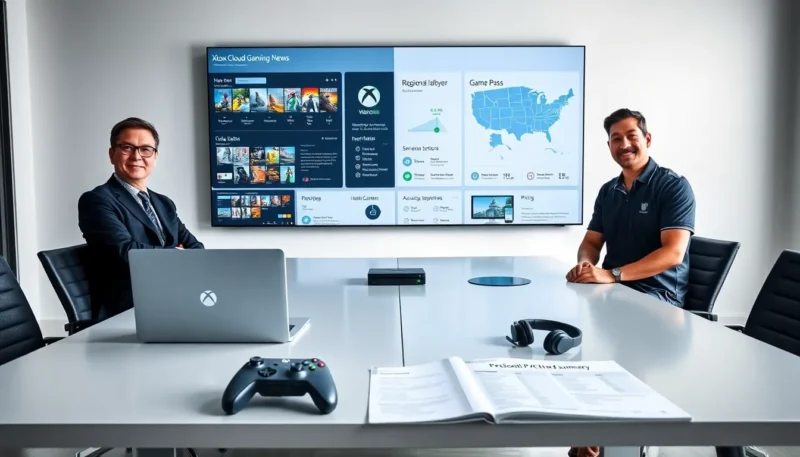
Cloud Gaming News

This article reports cloud gaming news for the current month. It gives updates on platforms, new releases, technology, and market moves. It explains how changes affect players and creators. It keeps language clear and direct. It avoids jargon and long sentences. It aims to inform readers quickly and precisely.
Key Takeaways
- This month’s cloud gaming news shows major platform updates—expanded Xbox Cloud Gaming regions, Stadia-like subscription adjustments, PlayStation server boosts, and Luna channel cuts—that change regional availability and pricing.
- Several cloud-enabled game releases now offer instant play, cross-save, and day-one cloud support, letting players jump in fast and switch devices without losing progress.
- Engineers deployed new codecs, NVMe tiers, and edge routing that cut bandwidth and latency, with hybrid rendering and predictive input smoothing improving perceived responsiveness.
- Fresh funding, publisher-host partnerships, and mergers are accelerating edge expansion and exclusive streaming windows, reshaping competition and distribution options.
- Players and creators should routinely check regional availability and subscription terms, test trial periods for latency and performance, and track partnership announcements to plan access and deployments.
Major Platform Updates And Service Changes
Platform operators issued new announcements that affect cloud gaming news this month. Google updated Stadia-like services and it adjusted subscription tiers for some regions. Microsoft expanded Xbox Cloud Gaming support and it added new countries to its availability list. Sony changed PlayStation cloud features and it increased server capacity for certain titles. Amazon reviewed Luna channel options and it dropped a few legacy channels.
Pricing changes appeared across several services in the cloud gaming news cycle. Operators lowered monthly fees for entry plans and they introduced bundle discounts with console services. Some platforms raised prices for premium tiers and they added capacity-based surcharges in limited markets. Availability shifts showed on regional maps. Services launched in Southeast Asia and they paused launches in smaller European markets temporarily.
Platform support received attention in many announcements. Companies added native apps for smart TVs and they improved browser compatibility. Third-party device makers released firmware updates that expanded controller support. Developers published compatibility lists and they recommended firmware versions for best performance. The industry published clearer service roadmaps and they set maintenance windows that players can track.
Notable New Cloud-Enabled Game Releases
Publishers released several cloud-enabled titles that feature instant play and cross-save. A major studio launched an open-world action game and it offered optional cloud-scaling for graphics. An indie developer released a multiplayer platformer and it enabled instant matchmaking via cloud servers. A sports franchise added cloud-only match types and it synchronized player profiles across devices.
Release details appear often in cloud gaming news posts. Platforms listed latency-reduction modes and they provided recommended internet speeds for each game. Reviewers tested frame pacing and they reported consistent 60 fps on average connections. Players praised instant updates and they noted that downloads no longer block playtime.
Developers pushed patches that optimize server load and they reduced instance spin-up time for popular game modes. Publishers began to ship day-one cloud support more frequently and they listed cloud features in storefront descriptions. Esports teams started to train on cloud builds and they ran trial tournaments that focused on parity between devices.
Technology, Performance, And Latency Developments
Engineers reported improvements in encoder efficiency that shape this cloud gaming news update. Teams deployed new codecs and they cut bandwidth by double-digit percentages for equivalent quality. Server farms adopted faster NVMe tiers and they lowered asset load times.
Latency research advanced in recent tests and it produced measurable gains. Labs reduced round-trip times by routing sessions through regional edge nodes and they implemented predictive input smoothing for certain genres. Vendors tested hybrid rendering that runs low-cost frames locally and heavy frames in the cloud. This method lowered perceived lag in pilot studies.
Performance monitoring tools became more common and they gave operators clearer metrics. Platforms instrumented session telemetry and they exposed latency heatmaps to partners. ISPs started to publish peering improvements and they worked with cloud platforms to shorten hops. These steps appear across cloud gaming news and they directly improve play quality for users.
Market Moves: Funding, Partnerships, And Mergers
Investors provided fresh capital that shaped recent cloud gaming news headlines. A venture fund closed a round for a platform that focuses on low-latency streaming and it plans to expand to mobile markets. A major cloud provider led a series A and it aimed to scale edge infrastructure.
Partnerships appeared between publishers and cloud hosts and they targeted exclusive streaming windows. Platform vendors struck content deals and they secured timed exclusives for certain regions. Device manufacturers signed distribution agreements and they bundled free trial access with new hardware.
Mergers drew regulatory attention and they altered competitive dynamics. Smaller cloud studios merged to pool server capacity and they formed joint operations to lower costs. Larger companies acquired middleware makers and they integrated streaming tech into broader service portfolios. Analysts tracked these moves and they adjusted market forecasts for the next two years.
What These Changes Mean For Players And Creators
Players will see faster access to new titles because cloud gaming news shows shorter release friction. They can test games instantly and they can switch devices without losing progress. They should check regional availability notices and they should confirm subscription terms before purchase.
Creators will gain clearer distribution options and they can reach new audiences without physical media. Studios can offload rendering tasks to cloud hosts and they can prototype larger worlds with less local hardware. Indie teams can use pay-as-you-go server models and they can scale up only when player counts rise.
Both players and creators should watch pricing and performance trends in cloud gaming news. They can compare latency reports and they can test trial periods to judge quality. They should follow partnership announcements and they can anticipate content windows that affect access. Companies will continue to refine services and they will publish updates that consumers and developers must track.