Skeleton Horse Minecraft: Complete Guide to Finding, Taming & Riding the Rarest Mount in 2026
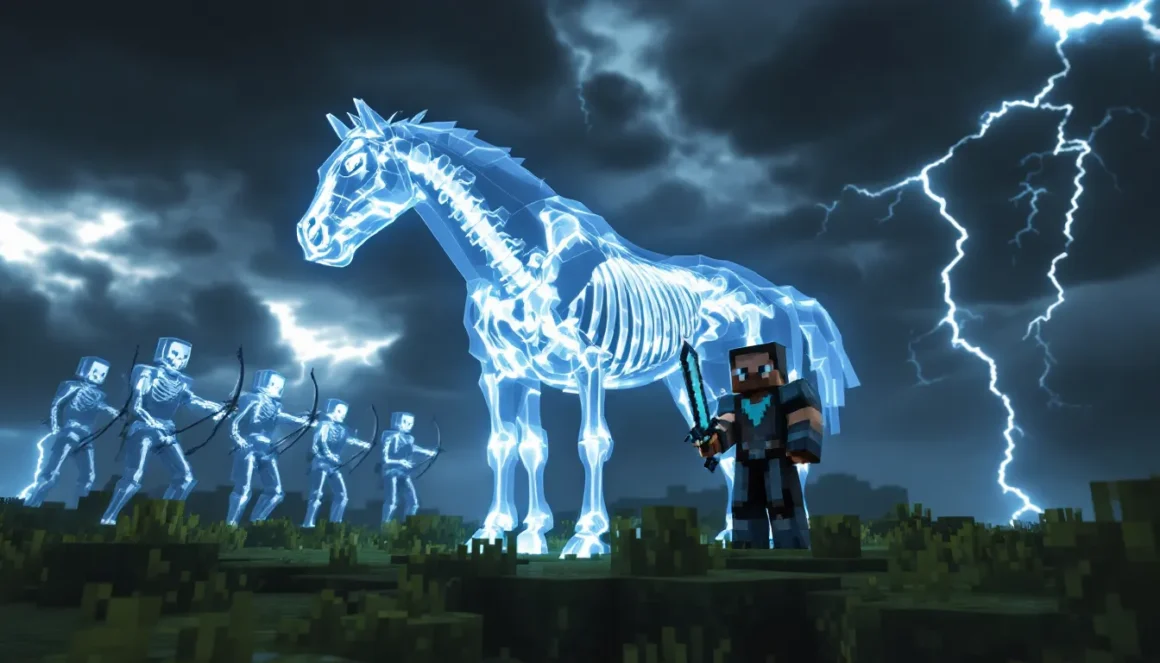
Skeleton horses are Minecraft’s most elusive mount, rare, eerie, and completely worth the hunt. Unlike regular horses that spawn peacefully in plains biomes, these undead steeds only appear through a specific lightning-triggered event called a skeleton trap. They’re the only horses that don’t need taming in the traditional sense, can walk underwater without drowning the rider, and have a haunting aesthetic that turns heads on any multiplayer server.
This guide covers everything players need to know about finding, claiming, and using skeleton horses in Minecraft. From understanding the exact spawn mechanics to leveraging their unique underwater abilities for exploration, readers will learn how to add this rare mount to their stable and make the most of its tactical advantages.
Key Takeaways
- Skeleton horses in Minecraft spawn exclusively through lightning-triggered skeleton traps during thunderstorms and are the only mounts that allow riders to breathe indefinitely underwater without armor or potions.
- Unlike regular horses, skeleton horses cannot be tamed through mounting attempts, bred, or fed—instead, players must defeat four enchanted skeleton riders in combat to immediately claim the four horses that spawn from each trap.
- Skeleton horses have fixed stats, 15 health points without armor capability, and immunity to drowning and poison, making them ideal for underwater exploration but unsuitable for extended combat scenarios.
- The rarest aspect of skeleton horses is their spawn mechanic: even on hard difficulty, skeleton traps have less than 7% chance per lightning strike, requiring patience through multiple thunderstorms to find even one.
- Skeleton horses can only be healed with Splash Potions of Harming due to their undead nature, and each trap discovered provides a permanent, non-renewable source of up to four mounts per player or server.
What Is a Skeleton Horse in Minecraft?
A skeleton horse is an undead variant of the standard horse mob in Minecraft. It spawns exclusively through the skeleton trap mechanic during thunderstorms and cannot be found wandering naturally in any biome. These horses have a distinctive skeletal appearance with visible bone structure and a translucent, ghostly texture that makes them stand out from other mounts.
Skeleton horses are classified as undead mobs, which gives them immunity to certain effects. They don’t take damage from drowning, can’t be affected by poison or regeneration potions, and are harmed by healing potions while healed by harming potions, opposite to living mobs. They’re passive once claimed and won’t despawn like some temporary mobs, making them permanent additions to a player’s collection.
Unique Characteristics and Abilities
The defining feature of skeleton horses is their ability to be ridden underwater without the rider dismounting or drowning. When a player rides one into water, they remain mounted and can breathe normally as long as they stay on the horse. The skeleton horse walks along the ocean floor at normal walking speed, making it the only mount in Minecraft that enables extended underwater travel without potions or enchantments.
Other unique traits include:
- No breeding capability: Skeleton horses cannot be bred using any items, making each one a fixed resource
- No feeding required: They don’t eat or need food to restore health
- Undead immunities: Immune to drowning, poison, and affected inversely by healing effects
- Permanent existence: Once claimed, they won’t despawn even if the player travels far away
- Saddle compatible: Can be equipped with saddles but not horse armor
These horses have the same movement speed as regular horses, though their speed stat is predetermined and can’t be improved through breeding. Their jump strength is similarly fixed and generally falls in the mid-range compared to bred horses.
How Skeleton Horses Differ from Regular Horses
The differences between skeleton horses and regular horses go beyond appearance. Regular horses spawn naturally in plains and savanna biomes, come in multiple color variations, and can be bred to produce offspring with improved stats. Skeleton horses have a single appearance, fixed stats, and zero breeding potential.
Regular horses require repeated mounting attempts to tame, with each attempt having a chance to succeed based on the horse’s “temper” value. Skeleton horses skip this entirely, once the skeleton rider is defeated, the horse is immediately available for the player to ride without any taming process. Players don’t need to feed them or build trust.
Another key difference is equipment compatibility. Regular horses can wear both saddles and horse armor for protection. Skeleton horses accept saddles for control but cannot equip any armor, leaving them vulnerable in combat situations. This makes them more of a utility mount than a combat one, even though their intimidating appearance.
Finally, the spawn rarity sets them apart. Players can find dozens of regular horses in a single plains biome, but skeleton horses require specific weather conditions and a fair amount of luck or patience. This scarcity makes them status symbols on many servers and a prized find for collectors.
How to Find a Skeleton Horse: The Skeleton Trap Mechanic
Finding a minecraft skeleton horse requires understanding the skeleton trap mechanic, which is the only natural way these mounts spawn in the game. Unlike regular passive mobs, skeleton horses don’t generate during world creation or spawn randomly, they’re tied exclusively to a lightning strike event during thunderstorms.
Understanding Thunderstorms and Spawn Conditions
Skeleton traps can only spawn during active thunderstorms in the Overworld. Thunderstorms occur randomly in Minecraft, typically lasting between 0.5 to 1 in-game day (around 10-20 minutes of real time). During a thunderstorm, lightning strikes occur at random locations, and each strike has a small chance to create a skeleton trap instead of just hitting the ground.
The spawn chance varies by difficulty:
- Easy difficulty: 0.75-1.5% chance per lightning strike
- Normal difficulty: 1.5-4% chance per lightning strike
- Hard difficulty: 2.8125-6.75% chance per lightning strike
- Peaceful difficulty: Skeleton traps cannot spawn (since hostile mobs don’t spawn)
This means players hunting skeleton horses should play on normal or hard difficulty and wait for thunderstorms. The actual spawn happens when lightning strikes an open area, if the strike would create a skeleton trap, a single skeleton horse appears at that location instead of just a lightning bolt.
Recognizing a Skeleton Trap Horse
A skeleton trap horse appears as a single, passive skeleton horse standing alone. It won’t have a skeleton rider initially and will appear completely harmless. The trap aspect comes from its behavior: when a player approaches within 10 blocks of the skeleton horse, lightning instantly strikes it and three additional nearby locations.
Each lightning strike (four total) spawns a skeleton riding a skeleton horse, creating a group of four hostile skeleton riders. These skeletons are equipped with enchanted bows and enchanted iron helmets, making them more dangerous than standard skeletons. The helmets prevent them from burning in daylight, allowing the trap to remain active even during the day.
The visual cue before triggering the trap is simple: a lone skeleton horse standing still without a rider. If a player spots this in the wild, especially during or after a thunderstorm, it’s almost certainly a trap. Regular skeleton horses don’t spawn naturally, so any skeleton horse encountered is either a trap or one that’s already been claimed by another player.
Best Biomes and Strategies for Finding Skeleton Horses
Skeleton traps can spawn in any biome where lightning strikes can occur, but some locations are better for hunting than others. Flat, open biomes make skeleton horses easier to spot from a distance and reduce the chances of the trap spawning in hard-to-reach locations.
Recommended biomes for hunting:
- Plains: Wide open spaces with excellent visibility
- Savannas: Similar to plains with minimal obstructions
- Beaches: Flat terrain along coastlines
- Ice plains: Good visibility, though less common for lightning strikes
Biomes to avoid include dense forests, jungles, and mountainous terrain where skeleton horses might spawn in locations that are difficult to spot or reach.
Effective hunting strategies include:
- Build a storm observation platform: Create a tall tower or platform in a plains biome to maximize visual range during thunderstorms
- Use render distance settings: Maximize render distance to spot distant skeleton horses
- Stay mobile during storms: Move around on horseback or with speed potions to cover more ground
- Mark potential trap locations: When lightning strikes, note the location and check it after the storm passes
- Server timing: On multiplayer servers, being online during thunderstorms gives an advantage since traps can spawn anywhere in loaded chunks
Some players use advanced spawn mechanics to optimize their search patterns during storms. Patience is the most important factor, skeleton traps are rare by design, and finding one often requires waiting through multiple thunderstorms.
How to Tame and Claim a Skeleton Horse
The process of claiming a skeleton horse minecraft mount differs significantly from taming regular horses. Instead of repeated mounting attempts, players must defeat hostile skeleton riders in combat before the horse becomes available. This turns the “taming” process into a combat encounter rather than a patience test.
Defeating the Skeleton Riders
Once a player triggers the skeleton trap by approaching within 10 blocks, four lightning strikes instantly spawn four skeleton riders. Each skeleton is mounted on a skeleton horse and equipped with an enchanted bow and enchanted iron helmet. These skeletons are more dangerous than normal variants, they deal increased damage, have higher health, and won’t burn in sunlight due to their helmets.
Combat strategies for defeating skeleton riders:
- Shield blocking: A shield blocks all arrow damage and allows players to close distance safely
- Bow counter-sniping: Engage from long range with a bow before they detect the player
- Melee rush with armor: Wear at least iron armor and sprint directly at the riders, attacking quickly
- Terrain advantage: Use natural cover like trees or hills to break line of sight
- Potion buffs: Strength and regeneration potions make the fight significantly easier
- Enchanted weapons: Sharpness or Smite enchantments speed up kills (Smite works since skeletons are undead)
The skeletons will actively pursue and shoot at the player once triggered. They’re accurate at mid-range and can deal significant damage if players aren’t prepared. Each skeleton has 20 health points (10 hearts), the same as a player, but their enchanted bows and helmets make them tougher opponents than standard skeletons.
One tactical consideration: skeleton horses don’t fight or run away during the battle. They remain passive and stationary even as their riders are killed. This means players can focus entirely on the skeletons without worrying about the horses escaping.
Taming Process and Requirements
After defeating all four skeleton riders, the skeleton horses become immediately claimable with no additional taming required. There’s no temper system, no feeding necessary, and no mounting attempts needed. Players can walk up to any of the four horses and right-click (or use the mount button on console) to ride them instantly.
This is the complete “taming” process, kill the skeletons, mount the horses. Unlike regular horses that need to be fed and mounted repeatedly until they accept the player, skeleton horses are passive and rideable the moment their riders are defeated.
Key points about claiming skeleton horses:
- All four are claimable: Each trap provides four skeleton horses, not just one
- No items needed: Don’t need wheat, apples, sugar, or any other food items
- Saddles still required for control: Can mount without a saddle but need one to steer
- Permanent claim: Once mounted, the horse is considered the player’s and won’t despawn
- Multiplayer considerations: On servers, whoever mounts the horse first claims it
Players should bring at least one saddle to the trap encounter if they want to ride the horse away immediately. Without a saddle, the horse can be mounted but not controlled, it will wander on its own when the player is on its back. Saddles can be found in dungeon chests, Nether fortresses, villages, or traded from leatherworker villagers.
If a player defeats the skeletons but doesn’t have a saddle, the horses will remain passive in that location indefinitely. Players can return later with saddles to claim them. But, on multiplayer servers, other players might claim unclaimed horses, so it’s best to bring saddles or mark the location carefully.
Riding and Controlling Your Skeleton Horse
Once claimed, skeleton horses function similarly to regular horses with a few key differences in equipment and capabilities. Understanding how to properly equip and control these mounts maximizes their usefulness for both land and underwater travel.
Saddle Requirements and Equipment
A saddle is mandatory for controlling a skeleton horse. Without one, players can mount the horse but cannot steer it, the horse will move randomly while the player sits helplessly on its back. To equip a saddle, players open the horse’s inventory by mounting it and pressing the inventory key (E on PC, or the appropriate button on console), then placing the saddle in the saddle slot.
Unlike regular horses, skeleton horses cannot equip horse armor. The armor slots simply don’t exist in their inventory interface. This means skeleton horses have a fixed 15 health points (7.5 hearts) that cannot be increased through equipment. They’re more fragile than armored regular horses, making them unsuitable for extended combat situations.
Other equipment considerations:
- Leads: Can be attached to skeleton horses for tying them to fence posts
- Name tags: Can be named to prevent despawning and add personalization
- No chests: Unlike donkeys and mules, skeleton horses cannot carry chests or storage
The inability to equip armor is the biggest equipment limitation. Players who plan to ride skeleton horses through dangerous areas should clear threats beforehand or bring backup horses for combat situations.
Movement Speed and Water Abilities
Skeleton horses have fixed stats that don’t vary between individuals. Their movement speed is approximately 8.6 blocks per second, which falls in the mid-range for horses, faster than walking but not as fast as the fastest bred horses (which can reach over 14 blocks per second). Their jump strength is similarly fixed at around 2.5 blocks, meaning they can’t jump over tall fences or reach high ledges as easily as optimally-bred horses.
The defining advantage of skeleton horses is their underwater capability. When ridden into water, the horse and rider sink to the bottom and walk along the ocean floor at normal walking speed. The rider doesn’t dismount automatically and, crucially, doesn’t lose breath or take drowning damage while mounted on a skeleton horse underwater.
This creates a unique exploration method:
- Ocean floor travel: Cross large bodies of water by walking on the bottom
- Underwater structure exploration: Ride through ocean monuments or shipwrecks while maintaining mobility
- River shortcuts: Cut through deep rivers without swimming
- Safe descent: Descend from heights by landing in water and sinking safely
The breathing mechanic while riding underwater is the key tactical advantage. Players using techniques detailed in game guides have found that skeleton horses enable underwater exploration without the need for respiration enchantments, water breathing potions, or turtle helmets. The player’s air meter doesn’t decrease at all while mounted, allowing indefinite underwater time.
Limitations to the water ability:
- Speed: Underwater movement is walking speed, slower than swimming with Depth Strider boots
- Combat difficulty: Fighting while mounted underwater is awkward
- Exit challenges: Getting back to the surface requires finding slopes or dismounting to swim up
- No deep diving from surface: Must enter water and sink rather than diving down quickly
For land travel, skeleton horses perform adequately but don’t outclass well-bred regular horses. Their value lies in their versatility, being able to transition from land to water travel without changing mounts or equipment.
Breeding Skeleton Horses: What You Need to Know
Skeleton horses cannot be bred in Minecraft under any circumstances. Unlike regular horses, donkeys, and mules, which can be bred using golden carrots or golden apples, skeleton horses have no breeding mechanics at all. Players attempting to feed them any item, including golden carrots, apples, wheat, sugar, or hay bales, will find that skeleton horses simply don’t accept food.
This means every skeleton horse in a player’s collection must be obtained individually through skeleton traps. There’s no way to create a renewable farm or breeding operation for these mounts. The four horses obtained from a single trap are the only ones that trap will ever provide.
Implications of the no-breeding restriction:
- Fixed supply: Players are limited to four skeleton horses per trap found
- No stat improvement: Can’t breed for better speed or jump height
- Server economy: On multiplayer servers, skeleton horses have inherent scarcity value
- Loss is permanent: If a skeleton horse dies, it must be replaced by finding another trap
The breeding restriction applies equally across all Minecraft versions and platforms, Java Edition, Bedrock Edition, console, and mobile versions all prevent skeleton horse breeding. This is an intentional design choice by Mojang to maintain the rarity and special status of these undead mounts.
Players who want multiple skeleton horses need to hunt multiple skeleton traps, which requires patience and luck. On single-player worlds, finding even two or three traps can take many in-game hours. On multiplayer servers, competition for skeleton trap discoveries increases the difficulty further.
The inability to heal skeleton horses through feeding (covered in a later section) compounds the breeding limitation. Players can’t casually use skeleton horses the way they might use regular horses, knowing they can always breed more if one dies.
Advanced Uses and Strategies for Skeleton Horses
Beyond basic transportation, skeleton horses offer tactical advantages that make them valuable for specific gameplay situations. Their unique characteristics enable strategies that aren’t possible with other mounts or transportation methods.
Underwater Exploration and Travel
The primary advanced use for skeleton horses is underwater exploration. Their ability to keep riders breathing while submerged makes them the most efficient method for extended ocean floor travel and underwater structure exploration without expensive enchantments or consumable potions.
Specific underwater applications:
- Ocean monument raids: Ride through the monument’s interior, maintaining mobility while searching for sponge rooms and treasure
- Shipwreck looting: Cover large ocean areas quickly by riding along the bottom, spotting shipwrecks from below
- Underwater base access: Create bases at ocean depth with skeleton horse entry/exit points
- Ravine exploration: Explore water-filled ravines and caves while keeping breath meter full
- Guardian farming: Position for guardian farm construction without constant surface trips
Players conducting serious underwater projects find skeleton horses more convenient than constantly reapplying water breathing potions or returning to the surface. The infinite breath mechanic means sessions can last as long as needed without time pressure.
One advanced technique involves using skeleton horses to create underwater highways between bases. By clearing or marking a path along the ocean floor, players can travel between coastal bases faster than swimming with Depth Strider or building ice boat paths. The horse provides both speed and protection from drowning.
Limitations exist, skeleton horses move at walking speed underwater, which is slower than swimming with Depth Strider III. For short distances or quick dives, enchanted boots remain faster. Skeleton horses excel at sustained exploration and long-distance underwater travel where maintaining breath would otherwise be the limiting factor.
Combat Applications and Tactical Advantages
Skeleton horses have limited direct combat value due to their inability to equip armor, but they offer situational tactical advantages. Their undead nature and underwater capability create niche combat scenarios where they outperform regular horses.
Combat-related advantages:
- Undead immunities: Not affected by poison, wither effects, or instant damage potions (which heal them instead)
- Instant damage healing: Can be healed mid-combat with splash/lingering instant damage potions
- Underwater combat positioning: Enable bow combat from underwater positions against surface targets
- Quick escape routes: Use water as an escape path that pursuers on regular horses can’t follow
- Night raids: Skeleton appearance provides minor camouflage in dark environments
The instant damage healing mechanic creates an interesting tactical option. Players carrying splash potions of harming can heal their skeleton horse while simultaneously damaging enemies. This reversal of normal healing mechanics can surprise opponents in PvP situations.
Underwater combat positioning offers creative ambush opportunities. A player on a skeleton horse can wait submerged in a lake or ocean, breathing indefinitely, then surface to attack when targets approach. This works particularly well against players or mobs that can’t detect underwater threats.
Drawbacks in combat include:
- Low health: 15 HP without armor makes skeleton horses fragile
- Fixed stats: Can’t breed for optimal combat-ready horses
- No armor protection: Takes full damage from all attacks
For serious PvP or PvE combat, regular horses with diamond armor remain superior. Skeleton horses work better as utility mounts that occasionally see combat rather than dedicated war horses. Tactical players leverage unique mob mechanics to create advantage in specific scenarios rather than relying on skeleton horses as primary combat mounts.
Protecting and Maintaining Your Skeleton Horse
Skeleton horses require different maintenance approaches than regular horses due to their undead nature and inability to eat. Understanding how to keep them alive and safe prevents losing these rare mounts to preventable deaths.
Health Management and Healing
Skeleton horses have 15 health points (7.5 hearts) and cannot be healed through conventional feeding methods. They don’t eat any food items, including golden apples, golden carrots, wheat, sugar, or hay bales. This makes health management more complex than with regular horses.
Methods for healing skeleton horses:
-
Splash Potion of Harming: Due to their undead nature, instant damage potions heal skeleton horses instead of hurting them. A Splash Potion of Harming I heals 6 HP, while Harming II heals 12 HP.
-
Lingering Potion of Harming: Creates a damage cloud that heals the skeleton horse over time as it stands in the area effect.
-
Regeneration from beacons: Skeleton horses benefit from Regeneration effects when within range of a beacon with Regeneration selected. This provides passive healing over time.
-
Natural regeneration: Skeleton horses slowly regenerate health naturally over time, though this is significantly slower than feeding regular horses.
The most practical healing method is keeping a few Splash Potions of Harming for emergencies. These can be brewed using awkward potions, poison, and fermented spider eyes. The ingredient requirements make them more expensive than feeding a regular horse, adding to the maintenance cost of skeleton horses.
Important notes about health management:
- Healing potions damage them: Regular healing potions will hurt skeleton horses instead of healing them
- Regeneration potions work normally: Even though being undead, Regeneration effects heal them properly
- No passive healing from food: Can’t maintain health through casual feeding like regular horses
Players should monitor skeleton horse health carefully and avoid unnecessary risks, since healing requires specific preparation.
Keeping Your Skeleton Horse Safe
The scarcity of skeleton horses means losing one is a significant setback. Protection strategies focus on preventing death through environmental hazards, mob attacks, and player mistakes.
Recommended protection measures:
- Build enclosed stables: Protect horses from lightning strikes, creeper explosions, and skeleton attacks
- Use fencing: At least 2-block-tall fences or walls prevent horses from wandering into danger
- Apply name tags: Named skeleton horses won’t despawn even in unusual circumstances
- Light the area: Prevent hostile mob spawns near stables
- Avoid lava zones: Skeleton horses burn and die in lava like any mob
- Don’t use in major combat: Reserve skeleton horses for travel and exploration, not boss fights
- Create multiple bases: Distribute skeleton horses across bases to prevent losing all of them to a single incident
On multiplayer servers, additional considerations include:
- Claim protection: Keep skeleton horses within land claim or protected areas
- Hide stables: Don’t build obvious stables that advertise rare horse locations to other players
- Backup mounts: Keep at least one skeleton horse in a secret location as backup
- PvP awareness: Avoid riding skeleton horses in PvP zones where they might be killed
Environmental hazards that commonly kill skeleton horses:
- Lava: Instant death in most cases
- Lightning: Can strike horses during thunderstorms if not under cover
- Falling: Can die from fall damage when dismounted on cliffs or mountains
- Drowning: Actually immune, skeleton horses can’t drown, making water a safe zone
- Suffocation: Can suffocate in blocks if teleported or glitched into solid terrain
The inability to replace skeleton horses easily through breeding makes every loss permanent until another trap is found. Cautious players treat skeleton horses as valuable resources rather than disposable mounts, using them strategically when their underwater abilities provide clear advantages.
Common Mistakes and Troubleshooting Tips
Players new to minecraft skeleton horse mechanics often make predictable mistakes that result in lost horses or missed opportunities. Understanding these common errors helps avoid frustration.
Mistake: Triggering the trap unprepared
Many players accidentally trigger skeleton traps without proper gear, weapons, or armor. The four skeleton riders appear instantly and attack immediately, often overwhelming unprepared players. Some die in the encounter and lose their items near the trap.
Solution: Always approach lone skeleton horses with full health, decent armor (at least iron), and a shield or bow. If unprepared, mark the location and return with proper equipment.
Mistake: Trying to feed skeleton horses
Players familiar with regular horse mechanics attempt to feed skeleton horses using golden carrots or apples, expecting to heal them or increase their temper. Skeleton horses don’t accept any food items.
Solution: Use Splash Potions of Harming to heal skeleton horses instead of food. Craft these before riding skeleton horses into dangerous areas.
Mistake: Forgetting to bring saddles
Defeating a skeleton trap without saddles in inventory means the player can claim the horses but can’t control or ride them away. Some players leave unsaddled horses at trap sites, returning later to find them gone (on multiplayer) or lost.
Solution: Carry at least 1-2 saddles when hunting skeleton traps. Saddles can be stored in ender chests for easy access.
Mistake: Expecting to breed skeleton horses
Players attempt to breed skeleton horses using various items, not realizing breeding is impossible. This wastes time and resources.
Solution: Accept that each skeleton horse must be obtained from traps. Plan accordingly for how many mounts are needed.
Mistake: Using skeleton horses in major combat
Some players ride skeleton horses into Nether fortresses, End battles, or raid farms, treating them like armored regular horses. The 15 HP and no-armor limitation means they die quickly in combat.
Solution: Reserve skeleton horses for exploration and travel. Use regular horses with diamond armor for combat situations.
Mistake: Not protecting horses from lightning
Players leave skeleton horses outdoors during thunderstorms, where lightning can strike and kill them. While rare, this happens often enough to be frustrating.
Solution: Build covered stables with solid roofs. Even a simple wooden roof prevents lightning strikes.
Mistake: Riding skeleton horses off cliffs
Players accustomed to using water to break falls with regular horses (dismounting before impact) forget that skeleton horses sink in water. Riding one off a cliff into water doesn’t save it from fall damage before hitting the water.
Solution: Dismount before long falls even into water, or use Slow Falling potions for horse and rider.
Troubleshooting: Skeleton trap won’t trigger
Occasionally, approaching a skeleton horse doesn’t spawn the riders. This usually happens if:
- The player is in Peaceful difficulty (skeletons can’t spawn)
- The trap already triggered and the riders were killed/despawned
- Chunk loading issues prevented proper trap initialization
Solution: Verify game difficulty is Normal or Hard. If the trap seems broken, mark it and check back later, it might be a visual bug.
Troubleshooting: Can’t find skeleton traps during storms
Players wait through multiple thunderstorms without finding traps, becoming frustrated with the spawn rates.
Solution: Skeleton traps are genuinely rare, even on Hard difficulty, the chance is under 7% per lightning strike. Expect to wait through 3-5+ storms before finding a trap. Consider increasing search radius or switching to different plains biomes.
Troubleshooting: Skeleton horse disappeared
Claimed skeleton horses sometimes vanish, especially on multiplayer servers.
Common causes:
- Killed by mobs or environmental hazards
- Other players killed or claimed it (multiplayer)
- Wandered away through unlit or unfenced areas
- Server lag caused despawning (rare but possible)
Solution: Always use name tags on skeleton horses and keep them in fenced, lit, protected areas. Check death logs on servers if available.
Conclusion
Skeleton horses remain one of Minecraft’s most distinctive and mechanically interesting mounts. Their rarity, unique underwater abilities, and undead characteristics make them valuable additions to any player’s stable even though their limitations in armor and breeding. Finding a skeleton trap requires patience and favorable RNG, but the reward is a mount that enables exploration strategies impossible with regular horses.
The key to successfully using skeleton horses is understanding their niche, they’re specialized utility mounts for underwater work and long-distance ocean travel, not replacements for well-bred combat horses. Players who recognize when to use a skeleton horse versus a regular horse will get the most value from these rare creatures.
For dedicated collectors and explorers, hunting skeleton traps during thunderstorms becomes a rewarding meta-game within Minecraft. The tension of spotting a lone skeleton horse, the combat challenge of defeating the riders, and the satisfaction of claiming a permanent mount create memorable gameplay moments that regular horse taming can’t match.