Multitasking Myths: Why Gaming Performance and Intimacy Don’t Mix (The Truth About Distractions)
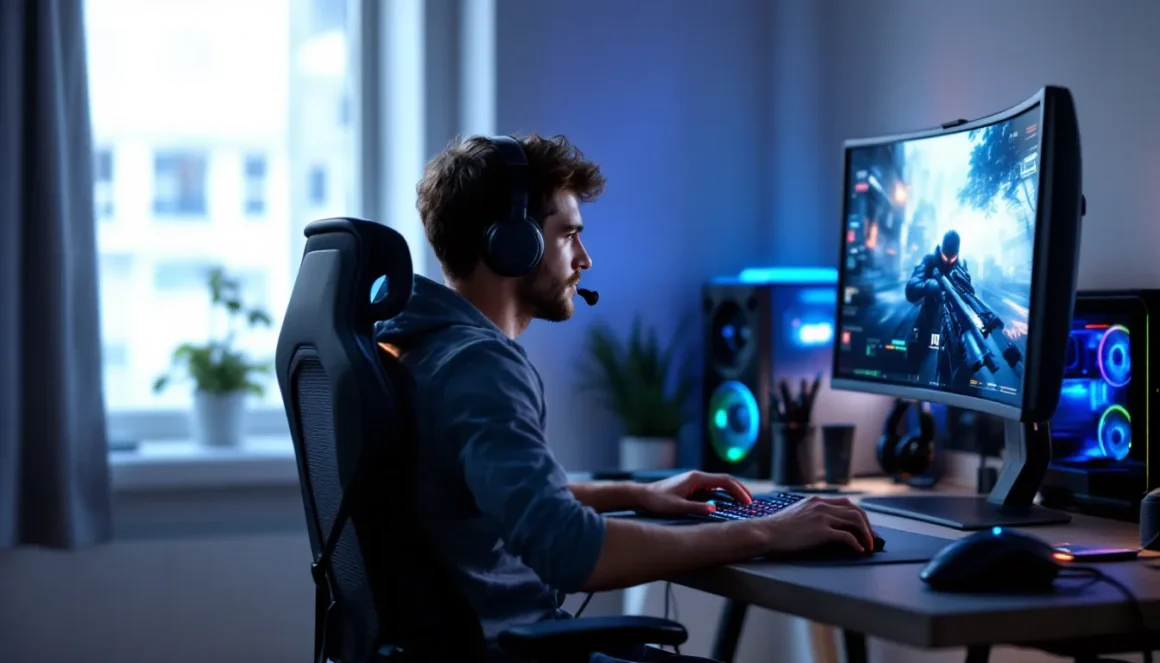
The internet loves its gaming memes, and few have become as widespread, or as awkward, as the concept of maintaining peak performance during intimate moments. It’s spawned countless jokes, Reddit threads, and even a few viral streamer moments. But beyond the humor lies a legitimate question: can anyone actually game effectively while distracted by physical intimacy? The short answer is no, and the reasons go deeper than you’d think.
This isn’t about judging anyone’s personal choices or relationship dynamics. It’s about understanding how the human brain handles competing stimuli, how divided attention tanks gaming performance, and why your teammates in competitive lobbies definitely don’t deserve the consequences. Whether you’re a casual mobile gamer or grinding ranked matches in competitive shooters, the science and community experience tell the same story: multitasking during gaming isn’t the flex some people think it is.
Key Takeaways
- Divided attention during gaming sessions causes measurable performance degradation of 20-40%, with reaction times doubling from 150-200ms to 300-400ms in competitive scenarios.
- Gaming and physical intimacy both trigger dopamine release through different neural pathways, making it neurologically impossible to maintain focus on both activities simultaneously.
- Attempting to maintain gaming performance while distracted by physical intimacy creates a fractured experience that diminishes both the game and the intimate moment.
- Competitive game players have an ethical responsibility to their teammates, as distracted play directly impacts team performance, rankings, and the multiplayer experience for others.
- Healthy relationships require establishing clear boundaries between dedicated gaming time and quality partner time, with communication being essential to preventing resentment and neglect.
- The ability to step away from gaming when life requires it—including relationship moments—is a hallmark of healthy gaming habits, not weakness.
The Rise of the Gaming and Intimacy Multitasking Trend
What started as edgy internet humor evolved into a surprisingly persistent meme within gaming culture. The concept typically frames maintaining focus during a gaming session while receiving oral sex as some sort of ultimate test of concentration or dedication. It’s presented as a challenge, can you keep your K/D ratio intact? Will you clutch the round? Can you maintain your combo streak?
The trend gained traction through anonymous forum posts, usually on subreddits like r/gaming or r/relationships, where users would share (often embellished) stories about attempting this particular brand of multitasking. These posts generated thousands of upvotes and comments, cementing the idea in gaming internet culture.
How This Internet Phenomenon Became a Gaming Meme
The meme status solidified around 2018-2019, when it became a recurring joke format on Twitter and gaming Discord servers. Templates emerged: “Name a harder challenge than…” followed by variations on the theme. YouTubers made reaction videos. Streamers joked about it (carefully, given TOS restrictions).
What’s interesting is how the meme reveals certain attitudes within gaming culture, specifically, the exaggerated importance some players place on never breaking focus or leaving a match. The joke wouldn’t land if there wasn’t an underlying cultural expectation that “real gamers” never step away, even for legitimate reasons. This performative dedication gets amplified in competitive gaming spaces where AFKing is considered a cardinal sin.
The meme also reflects broader internet culture’s tendency to blend sexual content with everyday activities for shock value and engagement. Gaming, being a predominantly online hobby with younger demographics, became fertile ground for this particular strain of humor.
The Psychology Behind Multitasking During Gaming Sessions
Understanding why this multitasking approach fails requires a look at how human attention actually works. Spoiler: we’re much worse at multitasking than most people believe.
Cognitive Load and Focus: What Science Says
Cognitive load theory explains that working memory has limited capacity. When you’re gaming, especially in complex or competitive scenarios, your brain is already processing multiple streams of information simultaneously. You’re tracking enemy positions, monitoring cooldowns, communicating with teammates, managing resources, and executing mechanical inputs.
Adding intense physical stimulation creates what psychologists call “dual-task interference.” Your prefrontal cortex, responsible for executive function and decision-making, can’t effectively allocate resources to both activities. Research on distracted performance consistently shows that divided attention results in significantly worse outcomes on both tasks.
For gamers, this manifests as delayed reactions, missed inputs, poor positioning, and questionable decision-making. A study on multitasking during complex tasks found performance degradation of 20-40% when attention was split between two demanding activities. In competitive gaming where milliseconds matter, that degradation is catastrophic.
The phenomenon is similar to studies on texting while driving, people consistently overestimate their ability to handle multiple demanding tasks because they’re unaware of the performance decline as it happens.
The Dopamine Rush: Gaming vs. Physical Intimacy
Both gaming and sexual activity trigger dopamine release, but in different ways and through different neural pathways. Gaming provides variable reward schedules, kills, level-ups, loot drops, that create steady dopamine hits optimized for sustained engagement. Physical intimacy triggers more intense, immediate dopamine and oxytocin floods designed to override other cognitive processes.
Your brain’s reward system can’t meaningfully process both simultaneously. What typically happens is rapid attention switching, where focus bounces between stimuli. This creates a fractured experience where neither activity receives full engagement. Gamers attempting this often report that they’re not truly present in either moment, the gaming session feels off, and the intimate experience lacks connection.
From a neurological standpoint, trying to maintain gaming performance during intimacy is essentially asking your brain to ignore millions of years of evolutionary priority-setting. Physical intimacy is biologically programmed as a high-priority stimulus. Fighting that programming to maintain K/D ratio is a losing battle.
How Distraction Impacts Your Gaming Performance
Let’s get specific about what happens to your gameplay when attention is divided. The performance degradation isn’t subtle.
Reaction Time and Accuracy Deterioration
Competitive shooters live and die on reaction time. In games like Valorant, CS2, or Rainbow Six Siege, average reaction time for high-level players sits around 150-200ms. Under divided attention, that number easily climbs to 300-400ms or higher, the difference between winning a duel and getting headshot before your crosshair moves.
Aim precision suffers even more dramatically. Micro-adjustments required for tracking targets or flicking to heads demand fine motor control and visual-motor coordination. Both degrade significantly when cognitive resources are diverted. Players who typically maintain 20-25% headshot accuracy might see that number drop to single digits.
The same applies to MOBAs and fighting games. Missing last hits in League of Legends or Dota 2 because your timing is off by 100ms costs gold and lane pressure. Dropping combos in Street Fighter or Tekken because your input precision faltered means losing rounds.
Strategic Thinking and Decision-Making Under Divided Attention
Beyond mechanical execution, higher-level gameplay requires strategic thinking, map awareness, and adaptive decision-making. These executive functions are among the first casualties of divided attention.
In tactical shooters, you stop checking minimap, miss audio cues about enemy positioning, and make risky plays because you’re not fully processing the game state. In battle royales, your rotation timing gets sloppy, and you miss opportunities to third-party fights or rotate to better zones.
MMO raiders know that mechanics in games like Final Fantasy XIV or World of Warcraft require constant awareness of positioning, cooldown management, and phase transitions. Players have described streaming guides and gaming tech dedicated to optimizing focus during high-stakes encounters. Missing a single mechanic because attention lapsed can wipe the entire raid.
RTS players dealing with multitasking demands in StarCraft II or Age of Empires IV see their APM (actions per minute) drop and their macro slip. Supply blocks, missed production cycles, and delayed expansions compound quickly.
Genre-Specific Challenges: Which Games Suffer Most
Not all games are equally affected, though all suffer to some degree.
Highest Impact:
- Competitive FPS games (Valorant, CS2, Apex Legends)
- Fighting games (Street Fighter 6, Tekken 8, Guilty Gear Strive)
- MOBAs (League, Dota 2)
- Rhythm games (Beat Saber, OSU.)
Moderate Impact:
- Battle royales (Fortnite, PUBG, Warzone)
- MMO endgame content (raids, mythic dungeons)
- Competitive racing sims (iRacing, F1 23)
- Souls-like games (Elden Ring, Lies of P)
Lower Impact (but still noticeable):
- Turn-based strategy (Civilization, XCOM 2)
- Casual mobile games
- Story-driven single-player games on easy difficulty
- Auto-battlers (TFT, Hearthstone Battlegrounds)
Even in lower-impact genres, you’re not playing optimally. But at least you’re not throwing a ranked match or dying to a boss with 5% health remaining.
The Relationship Angle: Communication and Boundaries
Beyond performance metrics, there’s the human element. This situation involves another person and the dynamics of your relationship.
Setting Healthy Boundaries Between Gaming Time and Partner Time
Healthy relationships thrive on clear communication about needs, priorities, and boundaries. If gaming is important hobby time for someone, that’s legitimate, but so is a partner’s desire for undivided attention during intimate moments.
The “gaming during intimacy” scenario often suggests an imbalance. Either gaming has become so prioritized that stepping away from a match feels impossible, or there’s a communication breakdown about when gaming time ends and quality time begins. Many relationship counselors note that attempting to multitask during intimacy often stems from poor time management or difficulty setting boundaries around gaming sessions.
The solution isn’t complicated: establish clear windows for uninterrupted gaming and separate times for partner engagement. If you’re in the middle of a competitive match, communicate that you need 20-30 minutes to finish properly. If it’s couple time, the game can wait.
Some couples develop systems, “if I’m in ranked, give me until the match ends” or “after 10pm, the console is off.” These boundaries prevent resentment and eliminate the perceived need to split attention.
When Gaming Becomes a Priority Problem
There’s a difference between healthy hobby dedication and gaming addiction. Warning signs include:
- Inability to step away from games even for important personal moments
- Choosing gaming over relationship maintenance consistently
- Partners expressing feeling neglected or secondary to gaming
- Missing work, social obligations, or self-care due to gaming
- Defensive reactions when gaming time is questioned
The “gaming during intimacy” scenario, when it’s not just a one-off joke, can indicate that gaming has become an unhealthy priority. If someone genuinely can’t put down the controller for intimate moments with a partner, that suggests deeper issues with impulse control or relationship investment.
Community discussions about developing gaming skills emphasize focus and dedication, but healthy gaming still includes the ability to step away when life requires it.
Real Gamer Experiences: What the Community Says
Moving from theory to practice, what does the gaming community actually report about attempting this multitasking feat?
Reddit and Forum Stories: The Good, Bad, and Awkward
Browsing through Reddit threads on r/gaming, r/truegaming, and various game-specific subreddits reveals mostly cautionary tales. The common thread: it sounds fun in theory, goes poorly in practice.
Typical experiences include:
- The Performance Collapse: “Went from carrying my team to going 2-15. My duo was asking if my internet was lagging.”
- The Awkward Explanation: “Died to the same boss seven times in a row. My raid leader thought I’d forgotten the mechanics.”
- The AFK Incident: “Just completely stopped moving mid-match. Got kicked for inactivity. Worth it? Not really.”
- The Ruined Moment: “Couldn’t focus on either thing. Felt disrespectful to my partner and still deranked.”
Few stories present it as a positive experience. Those that do are typically single-player, low-stakes scenarios, someone playing Animal Crossing or Stardew Valley where performance doesn’t matter.
Multiple threads feature variations of “tried this because of the meme, do not recommend.” The consensus is that it’s a fun concept that doesn’t survive contact with reality.
Streamer Culture and the Performative Aspect
Streamer culture adds another layer because performance becomes literal, you’re performing for an audience. Several streamers have been caught in compromising situations (usually betrayed by suspicious camera angles, unexplained reactions, or background audio), leading to clips that go viral and sometimes TOS violations.
The performative aspect reveals how much of this trend is about proving something, to viewers, to peers, to yourself. It’s gaming as machismo, where maintaining performance under any circumstances demonstrates dedication or skill. But experienced streamers and competitive players consistently push back against this mentality.
Professional esports players discussing focus and preparation on platforms like gaming culture hubs emphasize that peak performance requires eliminating distractions, not embracing them. No serious competitor would intentionally handicap themselves during practice or competition.
The trend also highlights parasocial dynamics where streamers feel pressure to constantly entertain or prove their “gamer credentials” through increasingly ridiculous challenges. It’s content generation that prioritizes engagement over well-being or genuine enjoyment.
The Etiquette of Online Multiplayer During Personal Moments
If you game primarily in online multiplayer environments, your divided attention doesn’t just affect you, it impacts everyone else in the match.
Your Teammates Deserve Better: Why AFK Happens
Going AFK (away from keyboard) or severely underperforming in team-based games creates a negative experience for four, nine, or even dozens of other players depending on the game. In competitive modes, it directly costs teammates ranking points, time, and often triggers frustration that cascades through multiple matches.
Most online games have AFK detection systems, but they trigger based on complete inactivity. A distracted player who’s technically present but functionally useless falls into a gray area, they’re not disconnected, just playing terribly. This is often worse than outright AFKing because the team doesn’t get loss mitigation or the option to surrender early.
From an etiquette standpoint, queuing for multiplayer content while planning to be significantly distracted is inconsiderate. It treats other players’ time and experience as less valuable than your multitasking attempt. The counter-argument “it’s just a game” ignores that those other players also invested time and often care about the outcome.
Competitive Gaming and the Importance of Full Attention
Competitive gaming ecosystems depend on players bringing their best effort. Ranked systems, MMR calculations, and competitive integrity all assume players are genuinely trying to win. Intentionally handicapping yourself, regardless of how, undermines that social contract.
In team-based competitive games, resources like gaming strategy guides emphasize that coordination and communication matter as much as individual skill. A distracted player can’t communicate effectively, misses callouts, and fails to execute team strategies.
The community takes competitive integrity seriously. Players have been banned or suspended for intentionally throwing matches, griefing, or not participating meaningfully. While being distracted by intimacy isn’t typically a bannable offense, it falls into the category of not respecting the competitive environment.
Some argue that casual or quick play modes are fair game for less-than-optimal focus. There’s more validity to that, if you’re playing unranked modes with no stakes, the impact is reduced. But even casual players deserve teammates who are at least trying to engage with the game meaningfully.
Finding Balance: Prioritizing What Matters Most
The underlying issue isn’t really about whether someone can maintain gaming performance during intimacy, it’s about priority management and being present for what you’re doing.
Creating Dedicated Time for Gaming and Relationships
Balanced life management means allocating appropriate time and attention to different priorities. Gaming is a legitimate hobby that deserves dedicated time. Relationships require investment and presence. These needs don’t have to conflict.
Practical approaches include:
- Scheduled gaming blocks: Communicate when you’re planning significant gaming sessions so partners know you’ll be unavailable
- Compromise on gaming duration: If a match takes 40 minutes, that’s reasonable time to be fully engaged: if you’re entering hour five of a session, maybe it’s time for a break
- “Between games” availability: Use queue times, lobby waits, or between-match moments to check in with partners
- Designated couple time: Establish periods where gaming is off-limits and you’re fully present with your partner
These strategies require basic communication skills and mutual respect, both for your hobby and your partner’s needs. The goal isn’t eliminating gaming or feeling guilty about it: it’s ensuring important relationships don’t suffer from neglect.
Understanding When to Put Down the Controller
Part of maturity, gaming or otherwise, is recognizing when it’s time to disengage from one activity for something more important. This doesn’t mean gaming is less valuable, just that life includes competing priorities.
Situations that warrant putting down the controller:
- Partner explicitly requests time or attention
- Important conversations or relationship moments
- Scheduled commitments or obligations
- Personal health needs (sleep, food, exercise)
- When gaming stops being fun and becomes compulsive
The ability to step away, even mid-session, distinguishes healthy gaming from problematic patterns. Yes, leaving a competitive match has consequences, but if something truly important comes up, that’s a reasonable trade-off. Most people can finish their current match: it’s the refusal to stop after that which signals issues.
Many players develop personal rules: “I can start a new ranked match if I have at least 90 minutes free” or “After midnight, only single-player games.” These self-imposed boundaries prevent situations where gaming and life obligations collide.
Conclusion
The “gaming during intimacy” concept works better as a meme than a practice. The science shows divided attention tanks performance, community experiences report awkwardness and regret, and relationship dynamics suffer when neither activity receives proper attention.
For competitive gamers, any significant distraction, whether intimate or otherwise, introduces performance degradation that’s measurable in reaction times, decision quality, and mechanical execution. For people in relationships, attempting to multitask during intimate moments suggests misaligned priorities or poor time management that communication and boundaries can address.
The real skill isn’t maintaining your K/D while distracted, it’s managing your time well enough that gaming and relationships both get the focus they deserve. Queue up when you’ve got dedicated time to play. Be present during intimate moments. Neither is revolutionary advice, but both lead to better experiences in gaming and life.
If the meme makes you laugh, great. If you’re genuinely attempting the multitasking? Consider whether proving it’s possible is worth the cost to your gameplay, your relationships, and your teammates’ experience. Probably not.