Person Playing Video Games: The Complete Guide to Gaming Better in 2026
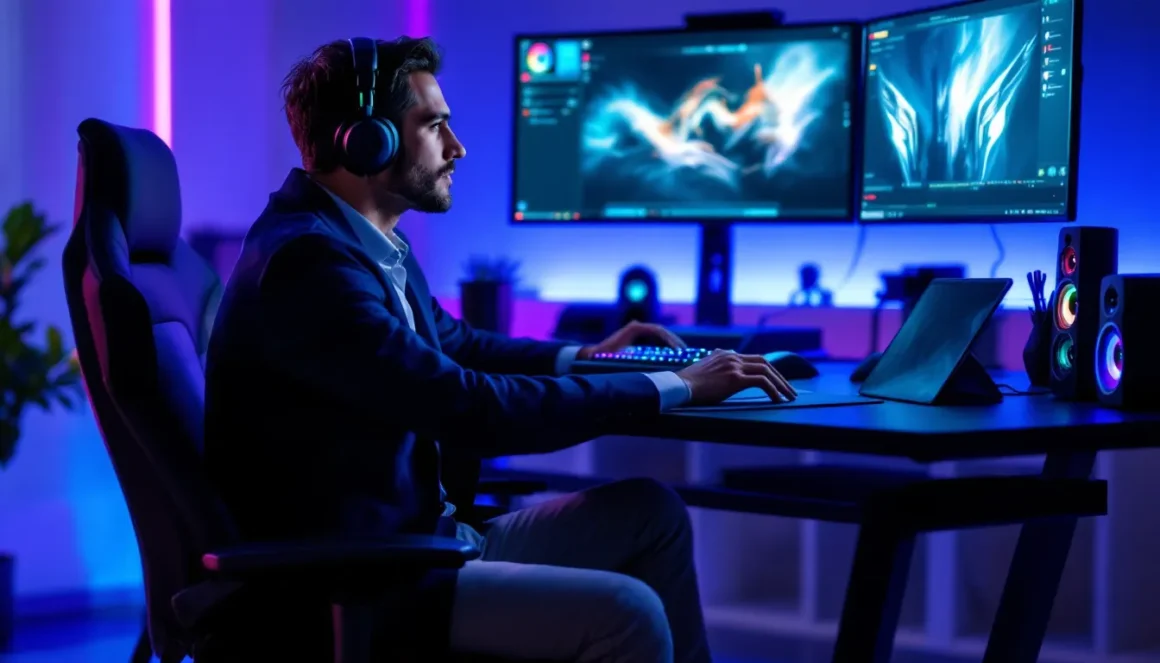
The image of a person playing video games has transformed dramatically over the past decade. What was once a solitary hobby confined to dimly lit bedrooms has evolved into a global phenomenon spanning competitive esports arenas, streaming platforms, and social communities. Whether you’re watching a guy playing video games on Twitch, observing a man playing video games in a tournament, or picking up a controller yourself, the landscape has never been more diverse or accessible.
In 2026, gaming isn’t just about entertainment, it’s about skill development, social connection, and even career opportunities. The modern gamer navigates complex ecosystems of hardware choices, genre-specific techniques, and community dynamics. This guide breaks down everything you need to know about gaming better, from understanding player archetypes to optimizing your setup, developing core skills, and avoiding common pitfalls that hold players back.
Key Takeaways
- Modern gaming has evolved into a diverse ecosystem where a person playing video games can seamlessly shift between casual exploration and competitive ranked play, with game design now supporting multiple playstyles through flexible difficulty modes and skill-based matchmaking.
- Competitive gaming skill development depends on deliberate practice focused on specific goals—spending 30-60 minutes daily on targeted aim training, map awareness, and strategic positioning yields measurable improvement faster than logging hours without direction.
- Proper ergonomic setup, including lumbar-support gaming chairs, monitor positioning at eye level, and 90-minute focused gaming sessions with 15-minute breaks, directly impacts both performance and long-term physical health for anyone playing video games seriously.
- Building genuine friendships and communities through co-op gaming and Discord-based groups provides emotional fulfillment that often exceeds in-person interactions, making social connection a core benefit of gaming rather than a secondary feature.
- Recognizing your player archetype—whether you’re a completionist, competitor, story chaser, or social gamer—helps you choose appropriate titles and allocate practice time realistically, avoiding burnout and maximizing engagement with the games you play.
- Common progression mistakes like blaming teammates, playing while tilted, or upgrading hardware before skills limit improvement; focusing exclusively on your own play, following a two-loss rule, and mastering fundamentals before flashy techniques accelerates climbing ranked ladders.
Understanding the Modern Video Game Player
The Evolution of Gaming From Casual to Competitive
The journey from casual to competitive gaming isn’t linear anymore. In 2026, players fluidly shift between modes depending on their mood, game, and available time. A person playing video games might spend Monday evening relaxing with Stardew Valley on Steam Deck, then grind ranked Valorant matches all weekend.
This flexibility reflects how game design has matured. Titles like Elden Ring offer both exploration-focused casual play and punishing challenge runs. Live-service games carry out seasonal structures that cater to weekend warriors and daily grinders alike. The barrier between casual and competitive has become permeable, with ranked modes, SBMM (skill-based matchmaking), and accessibility features allowing players to dial their intensity up or down.
Competitive gaming has also democratized. You don’t need to join a pro team to experience high-stakes play. Ranked ladders in games like League of Legends (Season 2026), CS2, and Apex Legends provide structured progression. Players can test themselves against similarly skilled opponents without the commitment of organized esports.
Different Types of Gamers and Their Playing Styles
Gaming communities now recognize multiple archetypes beyond the outdated “casual vs. hardcore” binary. Understanding where you fit helps optimize your approach:
The Completionist – Seeks 100% achievement rates, collects every item, and explores every corner. Games like Baldur’s Gate 3 and The Legend of Zelda: Tears of the Kingdom cater specifically to this playstyle with hidden secrets and exhaustive content.
The Competitor – Focuses on ranked play, meta optimization, and climbing leaderboards. These players study patch notes obsessively and adapt quickly to balance changes. You’ll find them dominating games with active competitive scenes.
The Social Gamer – Prioritizes playing with friends over winning. Co-op titles like Helldivers 2, Lethal Company, and party games dominate their library. Voice chat quality matters more than frame rates.
The Story Chaser – Values narrative experience above all else. They’ll tolerate mediocre gameplay for exceptional writing (Disco Elysium, The Last of Us Part II) and skip multiplayer-only titles entirely.
The Variety Streamer – Plays for content creation rather than mastery. They hop between trending titles, prioritize entertainment value, and develop broad but shallow expertise across genres.
Most players blend elements from multiple archetypes. A guy playing video games might complete every side quest in single-player RPGs but treat battle royales as purely social hangouts with friends. Recognizing your primary motivations helps you choose games, allocate practice time, and set realistic goals.
Essential Gaming Setup for Optimal Performance
Hardware Requirements Across PC, Console, and Mobile
Your hardware creates the foundation for every gaming experience. In 2026, the divide between platforms has narrowed significantly with cross-play and cloud gaming, but hardware still matters, especially for competitive titles.
PC Gaming remains the most customizable option. For competitive FPS and MOBA games, you’ll want:
- CPU: AMD Ryzen 7 7800X3D or Intel Core i7-14700K (minimum for consistent 240+ FPS)
- GPU: NVIDIA RTX 4070 or AMD RX 7800 XT for 1440p high-refresh gaming: RTX 4080 Super for 4K
- RAM: 32GB DDR5-6000 (16GB causes stuttering in modern titles like Starfield and Cyberpunk 2077 2.0)
- Storage: 2TB NVMe Gen 4 SSD minimum (games routinely exceed 100GB)
Console Gaming offers simplicity and optimization. The PS5 Pro and Xbox Series X refresh (both released Q4 2025) deliver native 4K at 60 FPS or 1440p at 120 FPS in most titles. Console players sacrifice mouse-and-keyboard precision but gain consistent performance without driver issues or optimization hassles.
Mobile Gaming has exploded with devices like the ASUS ROG Phone 8 and RedMagic 9S Pro featuring Snapdragon 8 Gen 3 chips that rival last-gen consoles. Competitive mobile titles like PUBG Mobile and Genshin Impact now support 120Hz displays and console-quality graphics. But, you’re looking at proper gaming hardware for serious competitive play.
Ergonomics and Comfort for Extended Gaming Sessions
A man playing video games for six hours straight will quickly discover that hardware means nothing if your body gives out first. Ergonomics prevent injury and maintain performance during marathon sessions.
Chair Selection: Proper lumbar support isn’t negotiable. Gaming chairs have improved dramatically since the racing-seat aesthetic dominated 2020. Look for chairs with adjustable lumbar pillows, armrests with 4D movement, and breathable mesh fabric. Herman Miller and Secretlab remain top-tier, but brands like Autonomous offer solid mid-range options around $400.
Desk Height and Monitor Position: Your monitor should sit at eye level with the top third of the screen matching your natural gaze. This prevents neck strain during long sessions. Desk height should allow your elbows to rest at 90 degrees while gaming. Adjustable standing desks let you alternate positions, which helps circulation.
Peripheral Placement: Keyboard and mouse positioning affects wrist health significantly. Keep your wrists neutral, not bent upward or sideways. Many competitive players use wrist rests, though opinions vary. Your mouse pad should be large enough (at least 450mm x 400mm for low-sensitivity players) to prevent awkward repositioning.
Controller Grip: Console players face different ergonomic challenges. The PS5 DualSense and Xbox Elite Series 2 feature improved ergonomics over previous generations, but hand fatigue still occurs. Take breaks every 90 minutes, stretch your fingers, and consider controller grips for extended sessions.
Display Technology and Audio Solutions That Matter
Display and audio technology directly impact gameplay, especially in competitive environments where milliseconds and audio cues determine outcomes.
Monitor Specifications for Competitive Gaming:
- Refresh Rate: 240Hz minimum for competitive FPS: 360Hz for pro-level CS2 or Valorant
- Response Time: 1ms GtG (gray-to-gray) to eliminate ghosting
- Panel Type: IPS offers better colors: TN provides faster response (though the gap has closed)
- Resolution: 1440p hits the sweet spot for competitive play: 4K sacrifices frames
Console Display Considerations: OLED TVs like the LG C3 or Samsung S95C provide stunning visuals with near-instant response times (especially in Game Mode). The 2026 models feature native 144Hz support and VRR (variable refresh rate) for smooth gameplay.
Audio Solutions: Competitive players rely on precise positional audio. Stereo headphones with good imaging often outperform surround-sound gimmicks. The SteelSeries Arctis Nova Pro and HyperX Cloud Alpha Wireless deliver accurate soundstages for detecting footsteps in tactical shooters. Open-back headphones (like the Sennheiser HD 560S) provide superior imaging but leak sound, fine for solo gaming, problematic if you share space.
Spatial audio technologies like Dolby Atmos and Sony Tempest 3D (PS5) have matured significantly. When properly implemented in games like Call of Duty: Black Ops Gulf War and Helldivers 2, they provide legitimate competitive advantages in identifying enemy positions.
Developing Core Gaming Skills and Techniques
Hand-Eye Coordination and Reaction Time Training
Raw mechanical skill separates good players from great ones, regardless of game knowledge or strategy. Hand-eye coordination and reaction time can be trained systematically.
Aim Training Software: Programs like Aim Lab and KovaaK’s offer scientifically designed drills targeting specific skills. Pro players routinely spend 30-60 minutes daily on aim training. Focus on:
- Tracking: Following moving targets (essential for beam weapons in Apex Legends)
- Flicking: Rapid target acquisition (critical for Valorant and CS2)
- Switching: Transitioning between multiple targets quickly
Consistency matters more than occasional peak performance. Average your scores over 10 runs rather than chasing high scores.
Reaction Time Baselines: The average gamer’s reaction time sits around 250ms for visual stimuli. Consistent practice can improve this to 180-200ms. Beyond that, you’re fighting biological limits. Games like Human Benchmark provide baseline measurements, but in-game reactions involve prediction and game sense, not pure reflexes.
Controller Precision: Console players develop muscle memory through repetition. Adjusting aim sensitivity requires at least 20 hours of gameplay before your brain adapts. What video game skills develop through practice extend far beyond gaming into real-world hand-eye tasks.
Strategic Thinking and Decision-Making Under Pressure
Mechanics get you to the fight: game sense wins it. Strategic thinking separates players who plateau at mid-ranks from those who climb to the top.
Macro vs. Micro Play: Macro refers to overall strategy, map control, resource management, team composition. Micro involves mechanical execution, hitting shots, ability timing, movement. Most players over-focus on micro while neglecting macro, which limits their ceiling.
In League of Legends, wave management and objective prioritization (macro) often matter more than perfect combo execution (micro). Similarly, Valorant players who understand map control and economy management consistently outperform mechanically superior opponents who make poor strategic choices.
Pattern Recognition: Top players unconsciously recognize game states and respond with pre-planned solutions. This develops through volume, thousands of hours expose you to similar situations repeatedly. Recording and reviewing gameplay accelerates this process by highlighting patterns you missed in real-time.
Decision-Making Under Time Pressure: Games force split-second choices with incomplete information. Improving this requires:
- Reducing decision fatigue: Automate common decisions through practice
- Simplifying complexity: Focus on 2-3 critical variables instead of 10
- Trusting instinct: Hesitation gets you killed: commit to decisions even if they’re occasionally wrong
Genre-Specific Skills Every Player Should Master
Each genre demands distinct skill sets. Mastering fundamentals within your preferred genres accelerates improvement.
FPS Fundamentals:
- Crosshair placement: Pre-aim common angles: never aim at the floor
- Recoil control: Learn spray patterns for primary weapons
- Positioning: Minimize exposed angles and maintain cover
- Audio discipline: Walking vs. running: sound cues reveal positions
MOBA/RTS Essentials:
- Resource management: CS (creep score) or economy directly determines power level
- Map awareness: Check minimap every 3-5 seconds
- Trading stance: Understanding when to engage, disengage, or reset
- Vision control: Ward/scout placement wins games invisibly
Fighting Game Basics:
- Frame data: Understanding advantage, disadvantage, and punish windows
- Hit confirms: Converting random hits into full combos
- Defense layers: Blocking, teching throws, and reversals
- Matchup knowledge: Every character interaction requires specific responses
Battle Royale Tactics:
- Rotation timing: Moving before the circle forces bad positioning
- Third-party awareness: Avoiding and executing multi-team situations
- Loot efficiency: Grabbing essentials fast, not perfect loadouts
- End-game positioning: High ground and zone control dominate final circles
The beauty of competitive games lies in how these skills compound, improvement in one area often translates to others.
Health and Wellness for Gamers
Managing Screen Time and Avoiding Gaming Fatigue
Gaming fatigue manifests as decreased reaction time, poor decision-making, and irritability. Unlike physical exhaustion, mental fatigue from gaming sneaks up gradually.
The 20-20-20 Rule: Every 20 minutes, look at something 20 feet away for 20 seconds. This simple practice reduces eye strain significantly. Modern gaming monitors often include blue light filters and eye-care modes, though their effectiveness remains debated.
Session Structure: Performance peaks in the first 90-120 minutes of focused gaming, then declines sharply. Pro players structure practice in 90-minute blocks with 15-minute breaks. These breaks aren’t for scrolling social media, physical movement and different visual distances help recovery.
Sleep Impact: Gaming before bed disrupts sleep quality due to blue light exposure and mental stimulation. Competitive players notice measurable reaction time improvements by establishing gaming cutoffs 90 minutes before sleep. If late-night gaming is unavoidable, enable night mode/warm color temperatures and reduce display brightness.
Physical Exercise and Posture Maintenance
Sedentary gaming takes a physical toll that compounds over years. Addressing this doesn’t require becoming a gym rat, targeted exercise and posture awareness suffice.
Posture Fundamentals:
- Neutral spine: Avoid slouching or leaning forward excessively
- Feet flat: On the floor or footrest, not dangling
- Shoulders relaxed: Tension in shoulders signals poor desk height or monitor position
Targeted Exercises: Esports organizations increasingly employ physical trainers. Common problem areas include:
- Wrist flexibility: Wrist curls and extensions prevent carpal tunnel
- Neck mobility: Chin tucks and neck rotations counter forward head posture
- Core strength: Planks and dead bugs maintain proper seated posture
- Hand strengthening: Grip trainers and finger extensions balance repetitive clicking
Cardiovascular Health: The stereotype of the unhealthy gamer persists because extended sitting increases cardiovascular risk. Just 20-30 minutes of moderate cardio (walking, cycling, swimming) daily offsets many negative effects. Several pro gamers credit improved cardiovascular fitness with better mental stamina during tournaments.
Mental Health Considerations and Balance
Gaming’s impact on mental health is nuanced. It provides stress relief, social connection, and achievement, but can also enable avoidance, addiction, and unhealthy comparison.
Recognizing Unhealthy Patterns:
- Gaming to escape problems rather than for enjoyment
- Neglecting responsibilities, relationships, or self-care
- Irritability or anxiety when unable to game
- Gaming interfering with sleep, work, or education
These patterns don’t make you a “gaming addict”, they signal that gaming has shifted from hobby to coping mechanism. Addressing underlying stressors (work pressure, social anxiety, depression) often naturally rebalances gaming habits.
Competitive Gaming Stress: Ranked anxiety is real. The pressure to perform, fear of letting teammates down, and frustration from losses trigger genuine stress responses. Healthy competitors:
- Set session limits (“3 ranked games, then casual or stop”)
- Focus on improvement over rank (process vs. outcome)
- Mute toxic players immediately, no exceptions
- Take breaks after tilting losses before queuing again
Social Connection Through Gaming: Gaming communities provide genuine friendships and support networks. The guy playing video games in a Discord call with international friends experiences social fulfillment that rivals in-person interaction. Maintaining balance means ensuring gaming complements rather than replaces offline relationships.
Social Aspects of Gaming in 2026
Online Multiplayer Communities and Communication
Multiplayer gaming communities have matured significantly, though toxicity remains an ongoing challenge. Understanding community dynamics helps you find your people and avoid burnout.
Platform-Specific Cultures: Discord has become the de facto social hub for gaming, with communities ranging from 10-person friend groups to 100,000+ member servers. Reddit communities like r/CompetitiveOverwatch and r/LearnCSGO offer strategy discussion, while Twitter serves as a news aggregator and hot-take generator.
Voice Communication Etiquette: Effective team communication wins games. Key principles:
- Brevity: “Enemy Raze, A main, low” beats “I hit the Raze over on A site and she’s probably one-shot”
- Timing: Don’t talk during clutches unless providing critical info
- Positivity: Criticism after rounds, encouragement during them
- Callouts: Learn map-specific terminology: “over there” helps nobody
Managing Toxicity: Report systems have improved, but they’re reactive. Proactive strategies include:
- Muting at first toxicity, not after it tilts you
- Playing with premade groups when possible
- Avoiding ranked during peak salt hours (late night, Monday evenings)
Finding Your Community: The best gaming experiences happen within consistent groups. Gaming communities form around shared interests beyond just the game, similar humor, playtimes, or competitive goals.
Building Friendships Through Cooperative Gaming
Co-op gaming creates bonds that rival traditional friendships. Shared challenges, inside jokes from failed raids, and late-night voice calls forge genuine connections.
Co-op Genres That Build Bonds:
- Survival games (Valheim, Grounded): Shared base-building and resource struggles
- Raid content (Destiny 2, FFXIV): Complex coordination requiring trust
- Party games (Among Us, Jackbox): Low-stakes fun focusing on laughter
- Roguelikes (Risk of Rain 2, Deep Rock Galactic): Overcoming RNG together
The Transition to Real Friendship: Gaming friendships become “real” when conversation extends beyond the game, sharing life updates, offering support during tough times, or even meeting IRL. Many long-distance friendships sustained primarily through gaming provide emotional support equivalent to local friend groups.
Guild/Clan Dynamics: Organized gaming groups provide structure and consistency. Good guilds establish clear expectations (attendance, behavior, skill requirements) and leadership that handles disputes fairly. Poor guilds tolerate toxicity, play favorites, or create oppressive mandatory participation requirements.
Streaming and Content Creation Opportunities
Content creation has become a viable path for skilled and entertaining gamers, though the landscape is more competitive than ever.
Streaming Platforms in 2026: Twitch remains dominant but faces stiffer competition from YouTube Gaming and Kick. Platform choice depends on goals:
- Twitch: Best discoverability for live content: strong community features
- YouTube: Superior VOD (video on demand) performance: better for clip highlights
- Kick: Controversial but offers better revenue splits: smaller audience
The Content Creator Myth: The dream of making money playing games attracts millions, but reality is harsh. Only about 0.02% of streamers earn livable income. Success requires entertainment value, consistency, and business savvy, not just gaming skill.
Building an Audience: According to data from content strategy guides, new streamers need 6-12 months of consistent streaming (3-5 days weekly) before seeing meaningful growth. Discoverability requires:
- Focusing on specific niches (not oversaturated games like Fortnite)
- Creating clip content for TikTok/YouTube Shorts
- Engaging authentically with viewers rather than chasing numbers
- Networking with similarly-sized creators
Production Quality: Entry-level streaming requires surprisingly little:
- Webcam: Logitech C920 or similar ($70)
- Microphone: Audio-Technica AT2020 or Blue Yeti ($100-130)
- Software: OBS Studio (free) or Streamlabs
- Encoding: Modern GPUs (RTX 4060+) or two-PC setups for demanding games
Beyond equipment, personality and authenticity matter more than 4K streams and perfect overlays.
Leveling Up Your Gaming Performance
Practice Routines and Improvement Strategies
Deliberate practice separates players who improve from those who stagnate even though logging thousands of hours.
Deliberate Practice Principles:
- Focused Goals: “Improve aim” is vague: “increase Voltaic Tracking score by 10%” is measurable
- Immediate Feedback: Record gameplay or use training modes with scoring
- Difficulty Balance: Practice at the edge of your abilities, not in comfort zones
- Consistency Over Volume: 60 minutes of focused practice beats 4 hours of mindless ranked grinding
Sample Competitive FPS Routine (90 minutes):
- Warm-up: 10 min aim training (easy scenarios)
- Skill work: 20 min specific drills (flicking, tracking, or movement)
- Gameplay: 50 min ranked/competitive matches
- Review: 10 min analyzing one round or life
MOBA/Strategy Practice Structure:
- Mechanics: 15 min last-hitting or combo practice in training mode
- Matchup study: 10 min reviewing one champion/character matchup
- Gameplay: 2-3 ranked games with one specific focus (“perfect CS in lane”)
- VOD review: 15 min analyzing lane phase decisions
Plateau Breaking: Everyone hits walls where improvement stalls. Common solutions:
- Role swap: Playing support in Valorant teaches timing: switching back to duelist improves entry fragging
- New game in genre: Skills transfer while fresh environments reveal bad habits
- Coaching: External perspective identifies blindspots
Analyzing Gameplay and Learning From Mistakes
Self-analysis accelerates improvement more than raw playtime. Every death, loss, or failed objective contains lessons if you look.
VOD Review Process:
- Record everything: NVIDIA ShadowPlay, OBS replay buffer, or platform tools
- Review losses, not wins: Wins hide mistakes: losses expose them
- Focus narrowly: Analyze one aspect per session (positioning, not “everything”)
- Ask specific questions: “Why did I die?” → “Could I have positioned differently?”
Common Analysis Mistakes:
- Blaming teammates (even if true, doesn’t help you improve)
- Reviewing only highlight plays (ego boost, not learning)
- Watching passively without pausing to think
- Trying to fix everything at once (focus one skill per week)
Learning From Better Players: Watching pros teaches advanced strategies, but there’s a gap between understanding and execution. Strategies that work at high ranks sometimes fail at lower levels because they require team coordination. Adapt concepts rather than copying blindly.
Utilizing Pro Resources: Sites tracking pro player configurations reveal how top competitors optimize their setups. Copying sensitivity or crosshair won’t make you pro, but understanding why they choose specific settings provides insight.
Competitive Gaming and Esports Pathways
The path from casual player to competitive gamer has become more structured, though it remains brutally selective.
Ranked Ladder Progression: Most competitive games feature ranked modes with visible skill ratings:
- League of Legends: Iron → Bronze → Silver → Gold → Platinum → Diamond → Master → Grandmaster → Challenger
- Valorant: Iron → Bronze → Silver → Gold → Platinum → Diamond → Ascendant → Immortal → Radiant
- CS2: Similar ELO-based system with visible rankings
Reaching top 1% (Diamond+ equivalent) demonstrates legitimate skill. Top 0.1% (Master/Immortal) indicates semi-pro potential.
Amateur Competitive Scene: Before going pro, players compete in:
- Open tournaments: ESL, FaceIt, and game-specific events
- Collegiate esports: NACE and CSMG organize university competitions
- Regional leagues: Proving grounds for scouting by professional orgs
The Pro Reality Check: Professional esports requires extreme dedication. Most pros:
- Practice 8-12 hours daily
- Earn less than $40K annually (excluding top-tier teams)
- Face career uncertainty (average esports career lasts 3-5 years)
- Sacrifice education and traditional career paths
For the 99.9% who won’t go pro, competitive gaming still offers:
- Achievement and skill expression
- Community and friendships
- Transferable skills (communication, pressure management)
- Deep engagement with your hobby
Common Mistakes Gamers Make and How to Avoid Them
Even experienced players fall into patterns that limit improvement or reduce enjoyment. Recognizing these traps helps you sidestep them.
Mistake #1: Blaming Teammates and External Factors
The “my teammates suck” mindset feels validating but kills improvement. Yes, you’ll get bad teammates. You’ll also get carried sometimes. Over hundreds of games, these average out. The only constant is you.
Solution: Focus exclusively on your own play. Ask “What could I have done differently?” after every death, even when your teammate made the obvious mistake.
Mistake #2: Playing Tilted
Tilt, emotional frustration affecting performance, compounds losses. One bad game becomes five because you’re playing angry, making impulsive decisions, and typing in chat instead of focusing.
Solution: Carry out a hard “two-loss rule.” After two ranked losses in a row, take a 30-minute break or switch to casual modes. Your winrate will thank you.
Mistake #3: Neglecting Fundamentals for Flashy Plays
Montage clips of insane plays are exciting, but pros win through consistent execution of fundamentals. A person playing video games who focuses on crosshair placement and positioning will climb faster than one practicing 360 no-scopes.
Solution: Dedicate 70% of practice time to boring fundamentals (aim, positioning, resource management) and 30% to advanced techniques.
Mistake #4: Playing Too Many Games/Roles Simultaneously
Spreading attention across multiple competitive games or playing every role equally dilutes improvement. Skill development requires focused repetition.
Solution: Main one game and 1-2 roles/characters until reaching competency (typically 100+ hours), then expand if desired.
Mistake #5: Upgrading Hardware Before Skills
A 360Hz monitor won’t boost your rank if you’re hardstuck in Gold. Gear matters at the margins, but skill gaps overwhelm hardware advantages.
Solution: Upgrade when your current setup limits performance (consistent 60 FPS in competitive games is the minimum threshold). Otherwise, invest time in practice before money in gear.
Mistake #6: Ignoring Game Updates and Meta Shifts
Sticking with outdated strategies after patches or meta changes handicaps performance. Balance updates fundamentally alter viability of characters, weapons, and tactics.
Solution: Read patch notes for your main game. Watch content creators discuss meta implications. Adapt strategies seasonally, not just when you notice everyone beating you.
Mistake #7: Poor Communication (Too Much or Too Little)
Comm discipline wins games. Talking constantly clutters voice chat. Saying nothing prevents coordination.
Solution: Make concise callouts (enemy positions, cooldowns, plans) and stay quiet otherwise. Listen more than you speak.
Mistake #8: Perfectionism and Ranked Anxiety
Fear of losing rank prevents players from queuing. This anxiety robs you of practice opportunities and maintains skill plateaus.
Solution: Reframe ranked as “the best practice mode” rather than a measure of self-worth. Your rank reflects current skill, not permanent value. It can always be regained.
Technology Trends Shaping Gaming Experiences
Gaming technology evolves rapidly, with 2026 bringing several trends that fundamentally reshape how people play.
AI Integration in Gaming
AI now extends beyond NPC behavior into several domains:
- Adaptive difficulty: Games dynamically adjust challenge based on player performance
- Procedural content: AI generates quests, dungeons, and even dialogue in games like No Man’s Sky updates
- Anti-cheat: Machine learning identifies cheaters more accurately than signature-based systems
- NPC interactions: LLM-powered NPCs in experimental titles hold natural conversations
The impact remains mixed, some implementations feel revolutionary (Cyberpunk 2077’s AI-driven crowd system), others gimmicky.
Cloud Gaming Maturation
Services like GeForce NOW, Xbox Cloud Gaming, and PlayStation Plus Premium have improved dramatically:
- Latency under 40ms in most regions (acceptable for single-player, challenging for competitive)
- 4K streaming at 60 FPS with robust internet
- Device flexibility, playing AAA games on phones, tablets, or low-end laptops
Cloud gaming hasn’t replaced local hardware but supplements it. Competitive players still demand local processing, but casual gamers increasingly stream.
VR and AR Gaming Progress
The Meta Quest 3 and Apple Vision Pro (now with gaming-focused updates) have pushed VR toward mainstream viability. Key 2026 titles like Asgard’s Wrath 2 and Resident Evil 4 VR demonstrate console-quality experiences in VR.
Challenges remain:
- Motion sickness affects 20-30% of users
- Physical space requirements limit adoption
- Price points ($500-$3,500) exceed traditional consoles
AR gaming (Pokémon GO’s spiritual successors) shows promise but hasn’t produced a breakout hit since 2016.
Cross-Platform Play and Progression
Cross-play has become expected rather than exceptional. Games without it face player backlash. More significantly, cross-progression (playing on PC, continuing on console) is now standard in live-service titles.
This fragmentation reduction benefits players but creates balance challenges, mouse/keyboard players often dominate controller users in shooters, leading to input-based matchmaking.
Display Technology Advances
OLED gaming monitors (previously exclusive to TVs) have arrived at competitive price points. The 2026 models feature:
- 240Hz+ refresh rates with near-instant response
- Perfect black levels and contrast
- Burn-in protection that actually works
MicroLED technology promises to replace OLED eventually, offering similar benefits without burn-in risk, but currently costs $10,000+ for gaming-sized panels.
Haptic Feedback Evolution
The PS5’s DualSense controller pioneered adaptive triggers and advanced haptics. In 2026, this technology has spread:
- Xbox controllers feature similar haptics
- PC gaming peripherals include haptic mousepads and keyboards
- Racing wheels and flight sticks integrate force-feedback improvements
Haptics increase immersion measurably but remain optional, competitive players often disable them to reduce input lag.
Game Preservation and Backwards Compatibility
The industry has partially embraced preservation:
- Xbox’s backwards compatibility program now covers 90% of 360/original Xbox titles
- PS5 Pro plays nearly all PS4 games with enhancements
- PC gaming inherently supports older titles (with community patches)
Digital-only releases and live-service shutdowns still threaten game preservation, but emulation communities and archival projects work to maintain access to gaming history.
Conclusion
The person playing video games in 2026 navigates an ecosystem more complex and rewarding than ever before. Success, whether defined as climbing ranks, building communities, or simply maximizing enjoyment, requires more than raw talent or expensive gear.
The fundamentals remain consistent: invest in proper hardware within your budget, develop skills through deliberate practice, maintain physical and mental health, and engage authentically with communities. Technology will continue evolving, meta will shift with every patch, and new games will dominate conversations. But the core principles of improvement, balance, and purposeful play transcend trends.
Whether you’re a man playing video games casually after work or grinding ranked queues with competitive ambitions, your gaming experience is yours to optimize. Take the strategies that resonate, ignore what doesn’t fit your goals, and remember that gaming should enhance your life rather than consume it. The best gaming session isn’t the longest or the highest-ranked, it’s the one that leaves you satisfied, connected, and eager for the next one.